
Nigeria’s Constitution does not prohibit a presidential ticket comprising candidates of the same faith
 By Editorial Team
·
Published on July 13, 2026
·
5 min read
By Editorial Team
·
Published on July 13, 2026
·
5 min read
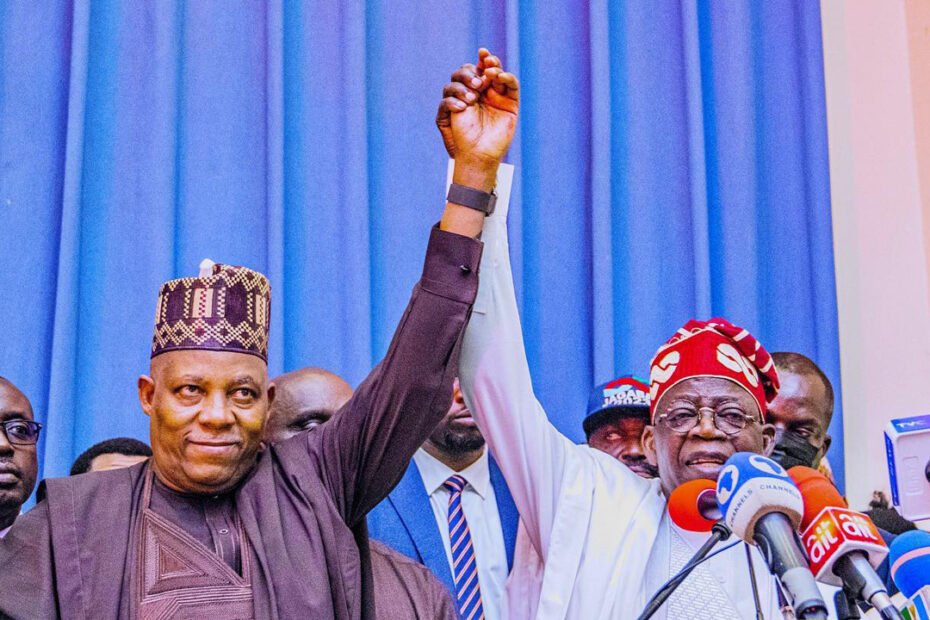
The decision by the All Progressives Congress (APC) to retain Vice President Kashim Shettima as President Bola Tinubu’s running mate for the 2027 presidential election has reopened one of the most contentious debates in Nigeria’s political history. Three years after the Muslim-Muslim ticket dominated national discourse ahead of the 2023 elections, the issue has once again divided opinion across political, religious and regional lines.
Predictably, reactions have been mixed.
While supporters describe the decision as one of continuity, stability and confidence in an administration pursuing long-term reforms, critics argue that it reflects a missed opportunity to reinforce national inclusion in a country as religiously and ethnically diverse as Nigeria.
Both arguments deserve careful consideration. However, they also raise a more fundamental question: what should ultimately determine the choice of Nigeria’s leaders?
Nigeria’s Constitution does not prohibit a presidential ticket comprising candidates of the same faith. Therefore, the APC has acted within its constitutional rights by reaffirming the Tinubu-Shettima partnership. Political parties are free to adopt whatever electoral strategy they believe will maximise their chances of victory.
Yet constitutional legality alone does not settle the matter.
Nigeria is not merely a constitutional federation; it is also a deeply plural society where perceptions of fairness, inclusion and balance often carry as much political weight as legal provisions. Since independence, successive administrations have sought—sometimes successfully and sometimes not—to maintain delicate regional and religious equilibrium in appointments and political representation.
This explains why the concerns expressed by organisations such as the Middle Belt Forum cannot simply be dismissed as partisan complaints. Their argument is rooted in a longstanding belief that national leadership should visibly reflect the country’s diversity. Whether one agrees with that position or not, it represents a legitimate perspective within Nigeria’s democratic conversation.
Similarly, the caution adopted by the Arewa Consultative Forum deserves attention. Rather than rushing to either endorse or condemn the decision, the forum has chosen to observe developments before taking an official position. That measured approach reflects political maturity in an era increasingly characterised by instant reactions.
Supporters of the renewed ticket also make persuasive arguments.
Continuity in governance has value. President Tinubu and Vice President Shettima have worked together since 2023 and have developed a functioning partnership. Changing a vice-presidential candidate could disrupt internal coordination, especially if the administration believes its economic and governance reforms require sustained leadership to mature.
Furthermore, democratic politics rewards consistency. If the President has confidence in his deputy’s loyalty, competence and ability to assist in implementing government policies, retaining him is neither unusual nor unprecedented.
However, there is another reality that neither supporters nor critics should ignore.
The 2027 election is unlikely to be decided primarily by religious identity.
The cost of living, inflation, unemployment, insecurity, electricity supply, food prices, healthcare, education and economic opportunities remain the issues that dominate everyday conversations across Nigeria. Whether Christian or Muslim, northerner or southerner, urban or rural resident, Nigerians are increasingly asking the same question: has governance improved their lives?
This is why Elder Sunday Oibe’s rhetorical question—”How is the market?”—captures the mood of many citizens more than the religious debate itself. It is a reminder that political symbolism eventually gives way to practical realities.
If families continue to struggle with rising living costs, businesses remain constrained, insecurity persists and public confidence weakens, neither religious balancing nor political continuity alone will guarantee electoral success.
Conversely, if government policies produce measurable improvements in economic stability, job creation, infrastructure, security and public welfare, many voters may place greater emphasis on performance than on the religious composition of the ticket.
Indeed, democracy offers every political party the opportunity to test its assumptions before the electorate.
As former ACF Secretary-General Anthony Sani rightly observed, those who disagree with the APC’s strategy are free to present what they consider a better alternative. Elections are contests of ideas, leadership and public confidence—not merely debates over symbolism.
The opposition, therefore, faces a challenge equal to that confronting the ruling party.
Rather than relying solely on criticism of the Muslim-Muslim ticket, opposition parties must present credible policies, united leadership and convincing solutions to Nigeria’s many challenges. Voters deserve meaningful choices, not merely objections.
Ultimately, Nigerians will not elect a ticket because it is Muslim-Muslim or Christian-Muslim. Nor should they reject one solely on that basis.
The defining issue should be whether those seeking office possess the competence, vision, integrity and capacity to improve the lives of ordinary Nigerians while governing fairly and respecting the country’s diversity.
As political campaigns gradually gather momentum ahead of 2027, leaders across party lines would do well to remember that citizens are less interested in political calculations than in practical outcomes.
The debate over religious balance will continue. It is an important conversation in a diverse federation. But it must not overshadow the larger national conversation about governance, accountability and development.
When Nigerians eventually cast their votes, they will judge not only who represents them, but also who has demonstrated the ability to lead them towards greater security, prosperity and national unity.
That is the verdict that truly matters.
