
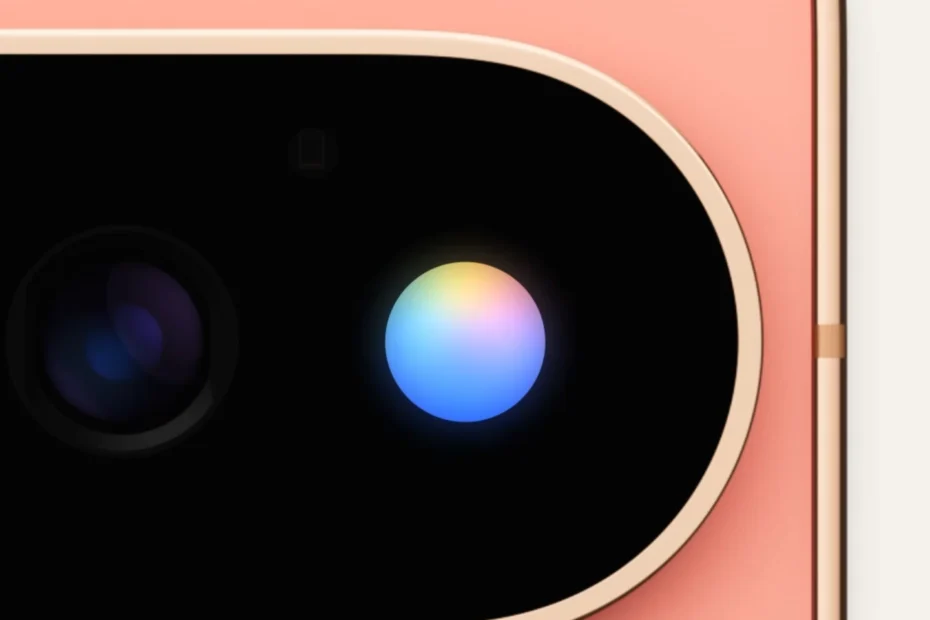
Currently, HiLight functions as a dedicated indicator light, pulsating when Gemini assistant is activated and illuminating incoming calls from favourite contacts when the phone screen is face down
 By Frank Ulom
·
Published on August 24, 2026
·
3 min read
By Frank Ulom
·
Published on August 24, 2026
·
3 min read
With the release of the Pixel 11 series phones, Google introduced a new rear visual alert ring called HiLight, which officially replaces the infrared temperature sensor on previous generations of Pixel phones.
Daily Lamp noted that the hardware is built directly around the flash on the rear camera strip and is available across the entire model range. Currently, HiLight functions as a dedicated indicator light, pulsating when Gemini assistant is activated and illuminating incoming calls from favourite contacts when the phone screen is face down.
Although Google announced at the launch event that the feature would support SMS, this capability was absent at launch. Furthermore, HiLight does not support third-party app integration, meaning users cannot assign specific colours to individual apps for easy identification of notification sources. Visual customisation is also severely limited; users can only choose from five preset colours, with no red option.
To understand exactly how HiLight works, YouTuber Phone Repair Guru performed a detailed teardown of the Pixel 11 Pro. After removing the back glass and unscrewing the bracket holding the rear camera module in place, the video clearly shows the module. The component contains eight surface-mount LEDs arranged in a circle around the central camera flash. Directly above these LEDs is a frosted white optical diffuser plate, used to blend the individual LEDs into a smooth, continuous glow.
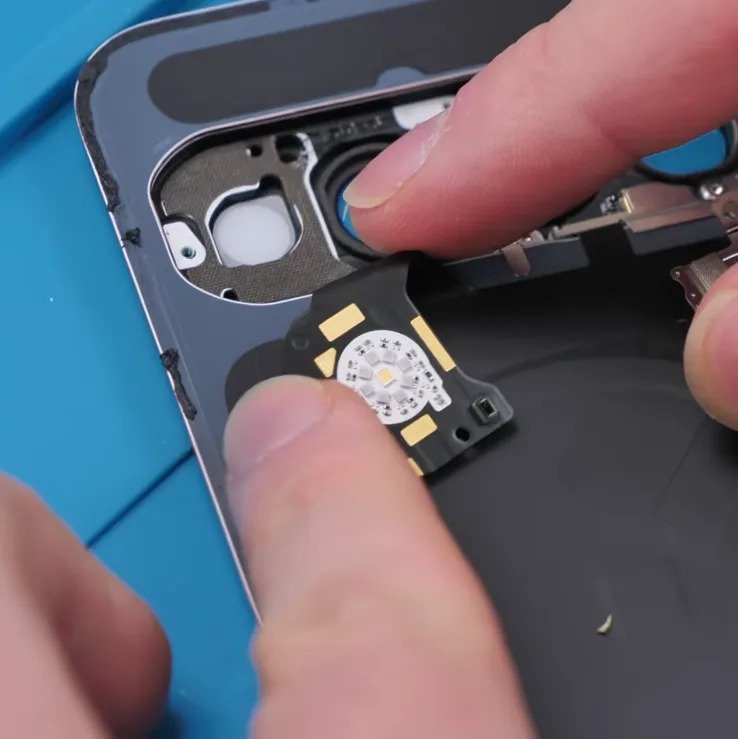
To confirm whether the hardware truly supported RGB, the YouTuber removed the diffuser and examined the bare board under a powerful microscope. Under magnification, each of the eight LEDs clearly showed individual red, green, and blue light-emitting diodes inside, proving that Google had indeed installed RGB LEDs.
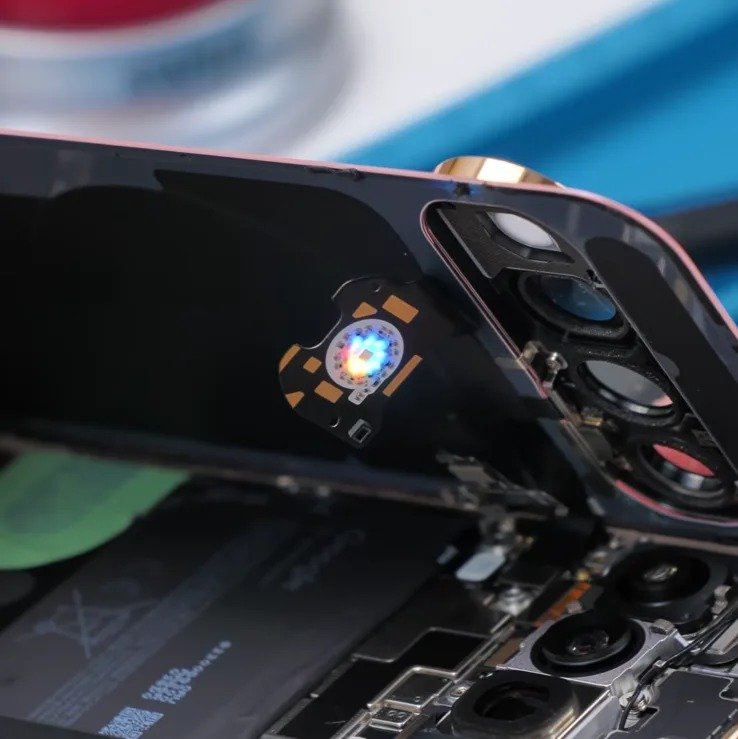
The YouTuber also pointed out that, technically, the device could be modified by permanently removing the diffuser, directly exposing the original LEDs. Ultimately, the teardown proved that HiLight’s limitations are entirely software-based, and Google is currently intentionally limiting the functionality to only a few basic trigger conditions and preset colours.
