
The findings, published in Current Biology, settle a long-running scientific debate over the identity of the extinct predator, whose slender body, elongated forelimbs and enlarged nasal cavities made it resemble modern cheetahs in Africa and Asia.
 By Frank Ulom
·
Published on September 4, 2026
·
3 min read
By Frank Ulom
·
Published on September 4, 2026
·
3 min read
The extinct North American cat Miracinonyx trumani, popularly known as the “American cheetah”, was not a true cheetah but a close relative of the puma, according to a new study combining ancient DNA and chemical analysis of fossils.
The findings, published in Current Biology, settle a long-running scientific debate over the identity of the extinct predator, whose slender body, elongated forelimbs and enlarged nasal cavities made it resemble modern cheetahs in Africa and Asia.
Scientists first classified Miracinonyx trumani as a close relative of modern cheetahs in the 1970s because of those physical characteristics. The animal was thought to have been adapted for fast running, although probably not at the extraordinary speeds reached by living cheetahs.
However, genetic research published in 2005 challenged that classification, while anatomical differences also raised doubts about its relationship with modern cheetahs.
The latest study provides stronger evidence that the animal belonged to a different evolutionary branch.
Molly Cassatt-Johnstone, a graduate student at the Paleogenomics Lab at the University of California, Santa Cruz, and lead author of the study, said reconstructing the evolutionary history and behaviour of extinct species solely from their physical remains is extremely difficult.
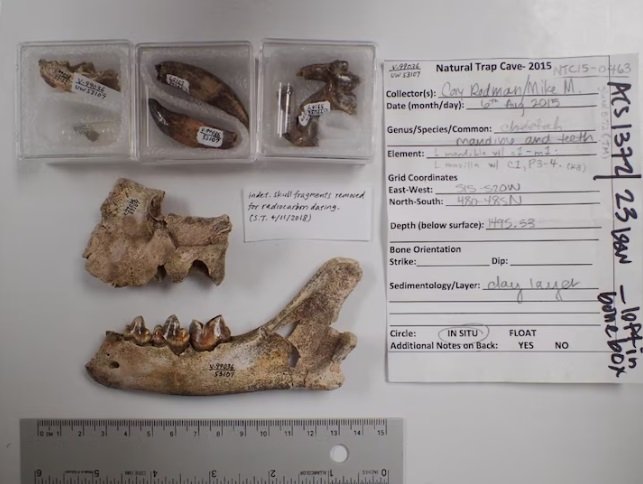
By sequencing DNA from four Miracinonyx fossils discovered in the Yukon and Wyoming and examining the chemical composition of the remains, the researchers were able to develop a clearer picture of the species.
When the team used the genetic information to construct a family tree of felids, the so-called American cheetahs were nowhere near African or Asian cheetahs.
Instead, the DNA placed Miracinonyx closer to the American puma, also known as the cougar or mountain lion.
The analysis showed that Miracinonyx and pumas were sister species that shared a common ancestor approximately 2.6 million years ago.
That period coincided with rapid cooling across North America and the expansion of grasslands.
The researchers believe the cat’s cheetah-like characteristics may have evolved as adaptations to the expanding plains, allowing it to pursue fast-moving prey while potentially escaping larger predators.
The discovery of approximately 30,000-year-old Miracinonyx bones in the Yukon also demonstrates that the species lived as far north as the Arctic.
“This study is the first published record of Miracinonyx in Canada,” said Julie Meachen, a National Geographic Explorer, functional morphologist and paleoecologist at Des Moines University in Iowa, who co-authored the study.
Meachen led a 2014 expedition that discovered several specimens of the species in Wyoming’s Natural Trap Cave.
She said the findings indicate that the extinct cat could survive in different environments and consume substantially different foods depending on where it lived.
Arctic fossils reveal surprising diet
The researchers also investigated what Miracinonyx ate by analysing the relative quantities of different forms of nitrogen and carbon preserved in the fossils.
These chemical signatures can provide clues about an animal’s diet and position in the food chain.
The approximately 20,000-year-old Wyoming fossils produced chemical signatures similar to those of other predators that fed on herbivores such as pronghorn, horses, bison and bighorn sheep.
The Yukon fossils, however, produced markedly different results.
Their chemical composition suggested that the Arctic population had a diet rich in fish, potentially including salmon and trout.
Researchers believe fish may have provided an important food source that allowed the slender predator to survive in the harsh Arctic environment while reducing competition with much larger predators, including cave lions.
The discovery also revealed an important difference between Miracinonyx and modern cheetahs.
Cheetahs possess anatomical adaptations in their forearms and wrists that provide additional stability while running at very high speeds. However, those adaptations reduce flexibility and make it more difficult for cheetahs to grapple with prey.
Miracinonyx, by contrast, retained the ability to use its forelimbs to grapple with prey.
Cassatt-Johnstone said the characteristic may have been particularly useful for an animal that sometimes relied on fish.
DNA reshapes understanding of extinct cat
The genetic findings have been welcomed by scientists who have previously questioned the conventional classification of Miracinonyx.
Stephen O’Brien, a molecular biologist who previously helped construct felid evolutionary trees but was not involved in the latest research, said the conclusion that Miracinonyx and pumas were sister species was plausible.
He noted that genetic evidence from fossils frequently forces scientists to revise evolutionary conclusions based on anatomy.
Ross Barnett, an independent researcher who led the 2005 genetic study challenging the animal’s classification, also praised the new research.
He described the discovery of two populations of the same species with substantially different diets as particularly significant, adding that finding the animal in Arctic environments was a major development.
The researchers said the findings also highlight similarities between Miracinonyx and modern pumas, which are capable of living across a wide geographic range and consuming a diverse variety of prey.
Ancient genes reveal other adaptations
The genome provided clues about how Miracinonyx may have adapted to life in northern environments.
Researchers found that at least two genes involved in biological clocks appeared to have been disabled.
The changes may have helped the animal cope with the extreme seasonal differences in daylight experienced at high northern latitudes, where summer brings exceptionally long days and winter brings prolonged darkness.
The genetic analysis also revealed another unexpected mutation involving sour taste.
One gene associated with detecting sour flavours appeared to have stopped functioning in Miracinonyx.
Cassatt-Johnstone said the discovery initially surprised her because it raised questions about why the animal would have lost the ability.
However, when researchers examined other cats included in their evolutionary analysis, they found that the same gene was also rendered ineffective by mutations in all the other felids examined, from closely related pumas to more distantly related lions.
That suggests the loss of the gene occurred millions of years ago in an ancestor shared by these cats and had not previously been recognised.
The latest research therefore transforms the “American cheetah” from a supposed North American counterpart of the modern cheetah into a distinctive relative of the puma.
Its remarkable resemblance to cheetahs appears to have been the product of similar evolutionary pressures rather than close ancestry, while its fossil record reveals a predator capable of adapting to environments ranging from North American grasslands to the Arctic.
