
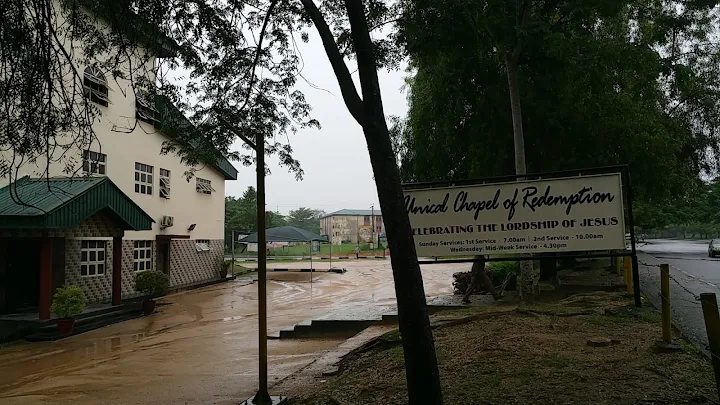
The controversy began with the recruitment of Ushie as Chaplain, alleging that his appointment breached Chapter Six of the UCOR Constitution, which provides that Chaplains and Assistant Chaplains should be drawn from churches affiliated with the Christian Council of Nigeria (CCN).
 By Frank Ulom
·
Published on August 26, 2026
·
11 min read
By Frank Ulom
·
Published on August 26, 2026
·
11 min read
The prolonged crisis rocking the University of Calabar Chapel of Redemption (UCOR) has taken another turn, with one faction presenting a detailed account of the dispute and disputing claims surrounding the tenure, removal and subsequent attempted return of the former Chaplain, Rev. Joseph Ushie.
The account, circulated amid the continuing disagreement within the Chapel, traces the crisis to disputes over Ushie’s appointment, the interpretation of the UCOR Constitution, his relationship with the Chapel Council, the non-renewal of his first tenure and subsequent court actions.
According to the account, the controversy began with the recruitment of Ushie as Chaplain, alleging that his appointment breached Chapter Six of the UCOR Constitution, which provides that Chaplains and Assistant Chaplains should be drawn from churches affiliated with the Christian Council of Nigeria (CCN).
It claimed that Ushie, who is a minister of the Assemblies of God Church (AG), was appointed despite objections raised by two members of the congregation, Prof Paul Ajah and Prof Essien David-Oku, who reportedly pointed out that the Assemblies of God was not affiliated with the CCN.
The account said the objections were overruled on the grounds that the recruitment process had gone too far and that Ushie should be allowed to serve one tenure.
It further stated that the Assemblies of God Church subsequently issued Ushie a letter releasing him to serve at UCOR, contrary to claims that his posting to the Chapel was independent of the denomination.
Early disagreements over Chapel administration
The account said disagreements emerged shortly after Ushie assumed office, despite his alleged prior acceptance of the provisions of the UCOR Constitution.
Among the issues identified was the appointment of an Assistant Chaplain.
According to the account, Ushie initially opposed the position, arguing that he could perform the duties alone. The Chapel Council, however, insisted that the office was constitutionally recognised.
It said Ushie was involved in the recruitment process and presented two candidates, although the candidates were rejected for allegedly not meeting the required qualifications.
Other disagreements reportedly centred on the holding of two worship services during peak academic periods, the use of Sunday School topics as the basis for sermons, the scheduling of monthly tarry nights and prayers after worship services.
The account said interventions by the Calabar District of the Assemblies of God Church and a Men’s Fellowship Committee helped to reduce tensions temporarily.
42-page document criticised Council structure
A major turning point, according to the account, was a 42-page document allegedly written by Ushie and dated February 7, 2024, titled “Who Runs Unical Chapel of Redemption and How Many Are They?”
The document was reportedly addressed to the Chairman of the Board of Trustees and contained criticisms of the Chapel’s Council system.
The account alleged that Ushie questioned the effectiveness of the Council structure and advocated a system in which the Chaplain would occupy the apex of both the administrative and ecclesiastical structures of UCOR.
It said his recommendations included the immediate dissolution of the Chapel Council, the establishment of an interim committee and an amendment of the UCOR Constitution to introduce a more centralised administrative structure.
The account further alleged that the document contained strong criticisms of some Council members.
Why Ushie’s first tenure was not renewed
The statement said Ushie applied for renewal of his tenure in January 2025, about a year before the expiration of his first tenure.
According to the account, the Council considered the application within the constitutionally prescribed period but rejected it.
Two reasons were given for the decision: the desire to correct what the authors described as the initial error of appointing a minister from a church not affiliated with the CCN, and Ushie’s opposition to the existing Chapel Council structure.
The account stressed that the non-renewal occurred before the subsequent Council election.
It therefore rejected claims that Ushie’s tenure was not renewed because Prof Ajah lost the Council election.
Dispute escalates after Council election
The account alleged that following the non-renewal, Ushie became involved in activities surrounding the Council election, including campaigning for particular candidates.
It claimed that he participated in a WhatsApp group where members campaigned for Prof Essien David-Oku and Mr Imoh Nse for Chairman and Secretary respectively.
The account further alleged that Ushie and his wife participated in the Council election and that he held meetings with the Electoral Committee.
The Chapel Council reportedly issued him a query over his alleged involvement in the election and subsequently dismissed him after finding his response unsatisfactory.
The account maintained that the dismissal was separate from the earlier decision not to renew his tenure.
David-Oku later sought renewal
The account also highlighted what it described as a change of position by Prof Essien David-Oku.
It said David-Oku had initially been among those who questioned the appointment of Ushie because of the CCN affiliation requirement but later became an advocate for his continued stay at UCOR.
According to the account, after becoming Council Chairman, David-Oku tabled the issue of Ushie’s tenure renewal before the Council, but the proposal was unanimously rejected.
It said David-Oku subsequently consulted four former Chaplains on May 31, 2025, with all four reportedly opposing the renewal.
The account alleged that a subsequent emergency congregational meeting became contentious, with members divided over the issue, but that David-Oku later announced that Ushie’s tenure had been unanimously renewed.
The authors argued that the decision further deepened the division within the Chapel.
Assemblies of God intervenes
The account said members of UCOR later petitioned the Assemblies of God Church on July 14, 2025, requesting Ushie’s recall.
It said the denomination invited Ushie, David-Oku and representatives of the petitioners to Enugu on October 7, 2025.
According to the account, the Board of Administration of the Assemblies of God subsequently advised Ushie to abandon his bid for a second tenure and return to the denomination after completing his first tenure.
It also said the Board requested that a send-off be organised for him.
The account further claimed that subsequent letters from the Assemblies of God directing Ushie to withdraw from UCOR were not complied with.
It said the Executive Council of the denomination eventually suspended Ushie from membership and dismissed him as a minister in June 2026.
University management intervenes
The dispute subsequently reached the management of the University of Calabar.
According to the account, two opposing groups separately met the newly elected Vice Chancellor, Prof Offiong E. Offiong, in January 2026 and presented their positions on the crisis.
A joint meeting involving both sides and University management was held on March 4, 2026.
The account said the Vice Chancellor’s position was that the UCOR Constitution had been breached through the appointment of a Chaplain from outside the CCN structure and through alleged illegal removals of Council members.
Management reportedly directed that the Constitution be strictly followed and should not be amended during the crisis.
It also reportedly recommended that Ushie, having completed his first tenure, should leave, while the Assistant Chaplain should equally vacate his position.
Other recommendations included reversing alleged constitutional violations and asking the CCN to provide an interim Chaplain pending the appointment of a substantive Chaplain and Assistant Chaplain.
The account said a memorandum of understanding was subsequently prepared for both factions to sign.
While the group represented by Prof A.D. Ekanem, Barrister E.R.S. Akpabio and Prof Paul Ajah reportedly signed the document, David-Oku and Imoh Nse, representing the other faction, allegedly declined to sign it.
The account said David-Oku was subsequently queried and suspended by the University management.
Court battles
The UCOR crisis has also generated several legal actions.
One of the cases was filed at the Federal High Court by Prof Ajah and Mr Agbor Eguma over an alleged demand that they sign documents relating to the change of bank signatories.
According to the account, the court struck out the fundamental rights application after finding that the applicants had not established a violation of their rights.
Another case was filed at the National Industrial Court by members of the Board of Trustees against Ushie and David-Oku.
The case sought, among other reliefs, a declaration that Ushie’s tenure expired on January 31, 2026, and that any purported extension was invalid.
The account said the court, in a ruling delivered on May 14, 2026, held that the tenure had expired on January 31, 2026, and that the purported extension was invalid because it was not supported by both the Council and congregation as required by the UCOR Constitution.
However, the court also held that the newly elected BOT members lacked the legal standing to institute the action after a Corporate Affairs Commission document had nullified their registration.
A separate Federal High Court case involving the BOT, CAC and David-Oku subsequently challenged the CAC position.
According to the account, the court, in a judgment delivered on June 30, 2026, held that the three BOT members had been duly elected based on congregational records.
It also reportedly found that the CAC had failed to invite the parties to resolve the dispute before issuing the disputed document and directed the commission to invite the parties to resolve the registration issue.
A further case at the Cross River State High Court concerning the alleged unlawful removal of Council members remains pending.
CCN appoints interim Chaplain
Following the interventions, the account said the University management directed Ushie to leave the Chapel and vacate his accommodation at the University staff quarters.
It claimed that Ushie eventually complied after initially refusing to leave.
The Christian Council of Nigeria subsequently appointed Rev. Israel Eyo, a former Chaplain, as interim Chaplain of UCOR.
A caretaker committee was also inaugurated on August 2, 2026, to oversee the administrative affairs of the Chapel.
August 9 incident leads to church closure
The latest escalation occurred on Sunday, August 9, 2026, when Ushie reportedly returned to the Chapel during a worship service.
According to the account, Ushie’s supporters brought him into the church after the interim Chaplain had commenced worship, with four police officers from the Airport Police Division allegedly accompanying him.
The account alleged that the development created tension and prompted the Cross River State Police Command, led by DCP Godwin Effiong, to intervene.
The police reportedly ordered worshippers to leave the premises and locked the church to prevent a possible breakdown of law and order.
At a meeting with representatives of the two factions at the Police Headquarters in Diamond Hill, Calabar, on August 10, the police reportedly advised the parties to seek an amicable resolution.
The account said the police subsequently directed that the Chapel remain closed pending an agreement between the factions.
It therefore disputed reports attributing the closure of UCOR to the Vice Chancellor of the University of Calabar.
Interim court order expires
The crisis also resulted in another legal action instituted by Ushie against the University, the Vice Chancellor, the Registrar, the Special Adviser on Religious Affairs and others.
According to the account, Ushie sought orders relating to his accommodation, pastoral office and alleged fundamental rights.
During the court vacation, his counsel reportedly obtained an accelerated hearing order and an interim injunction directing the parties not to interfere with certain fundamental rights and to revert to the status quo ante bellum.
The account said the interim order, granted on August 4, 2026, lasted 14 days and expired on August 18.
It further said disagreements emerged over the interpretation of the phrase status quo ante bellum, with Ushie’s supporters interpreting it as requiring his restoration as Chaplain, while the opposing faction interpreted it as preserving the existing interim administrative arrangement.
The substantive suit commenced on August 20, 2026, according to the account, and was adjourned until September 2 for hearing.
Crisis remains unresolved
The latest account of the dispute portrays the UCOR crisis as the product of several overlapping disagreements involving the interpretation of the Chapel Constitution, the appointment and tenure of the Chaplain, the authority of the Council, the role of the BOT, the conduct of Council elections and competing interventions by the Assemblies of God, CCN, University management, the police and the courts.
With the substantive court proceedings continuing and the Chapel operating under an interim arrangement, the dispute remains unresolved.
The competing factions have continued to advance different interpretations of the events, making the courts, the University management and other intervening Christian bodies central to any attempt to achieve a lasting resolution of the crisis.
