
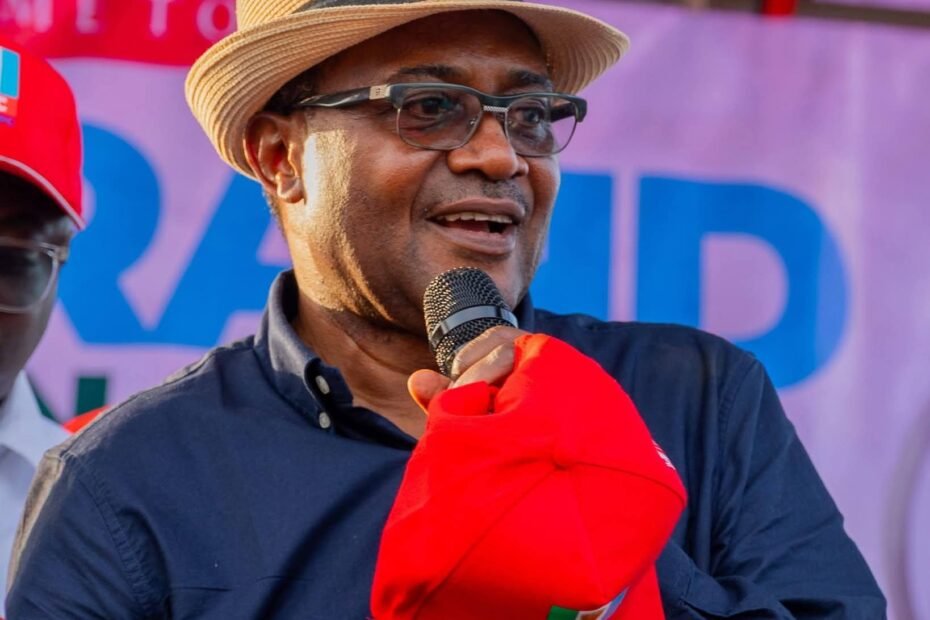
He identified fuel subsidy as a major drain on national resources and a longstanding structural problem that required decisive action…
 By Judex Okoro
·
Published on November 14, 2026
·
4 min read
Former Cross River State Chairman of the Peoples Democratic Party (PDP), Venatius Ikem, has described President Bola Tinubu’s removal of petrol subsidy as a defining economic reform that will remain his greatest legacy, despite the hardship Nigerians have experienced since its implementation.
Ikem, who stated this during an interaction with journalists in Calabar on Thursday, said the decision was one of the most fundamental economic reforms undertaken in Nigeria’s interest, arguing that its long-term benefits would eventually become evident if the government effectively managed its consequences.
“All over the world, no reform-minded president or leader, by whatever name, has ever been popular,” he said, explaining that major reforms often attract resistance because people naturally become accustomed to existing arrangements and are reluctant to embrace changes to the status quo.
He identified fuel subsidy as a major drain on national resources and a longstanding structural problem that required decisive action, noting that its removal was necessary to address some of the fundamental challenges confronting the Nigerian economy.
Ikem acknowledged that the decision came with enormous political and economic costs, suggesting that even Tinubu might have had moments of regret over the difficulties that followed its implementation.
“For Tinubu to have impacted on something as serious as removing fuel subsidy, I suspect that even himself, at some point, regrets that he did, given the trouble that has come with it,” he stated.
Nevertheless, the former PDP chairman maintained that the policy would define Tinubu’s presidency in the years ahead, describing it as a major legacy that future generations would associate with his administration.
“I can assure you that many years to come, the only legacy, probably the major legacy, he will be remembered for is the removal of the fuel subsidy,” he said.
While acknowledging the rising cost of living and other economic difficulties associated with the policy, Ikem faulted the government’s handling of its aftermath, arguing that adequate measures had not been put in place to sufficiently cushion the effects on ordinary Nigerians.
“How to manage the fallout is what I think they have not effectively done,” he observed.
He noted that improvements in Nigeria’s foreign reserves and other macroeconomic indicators had yet to translate into corresponding economic relief for citizens, stressing that positive developments at the macroeconomic level must eventually reflect in the living conditions of ordinary Nigerians.
Drawing parallels with the economic reforms undertaken during former President Olusegun Obasanjo’s first term, Ikem said such policies initially generated public resistance but eventually contributed to improved economic performance, arguing that reforms require time and consistent implementation to yield tangible results.
He expressed the belief that a second term for Tinubu would provide an opportunity for Nigerians to begin experiencing the benefits of the subsidy removal at the individual and household levels.
“For me, I think Tinubu taking on that monster is going to be his greatest legacy.
“And, most importantly, I believe it’s in returning him to power for a second term that the effects, the benefits of that monumental decision will begin to be felt at the microeconomic level,” he posited.
Ikem, however, urged the Federal Government to prioritise interventions that would ease the economic burden on Nigerians while sustaining efforts to stabilise the economy and ensure that the gains of the reforms translate into improved living conditions.
It would be recalled that Ikem resigned as Cross River PDP chairman in October, citing internal divisions, a crisis of direction and what he described as leadership incoherence within the party.
He described his resignation as a difficult but necessary decision, following careful consideration of the party’s prevailing circumstances and his capacity to continue providing effective leadership.
