
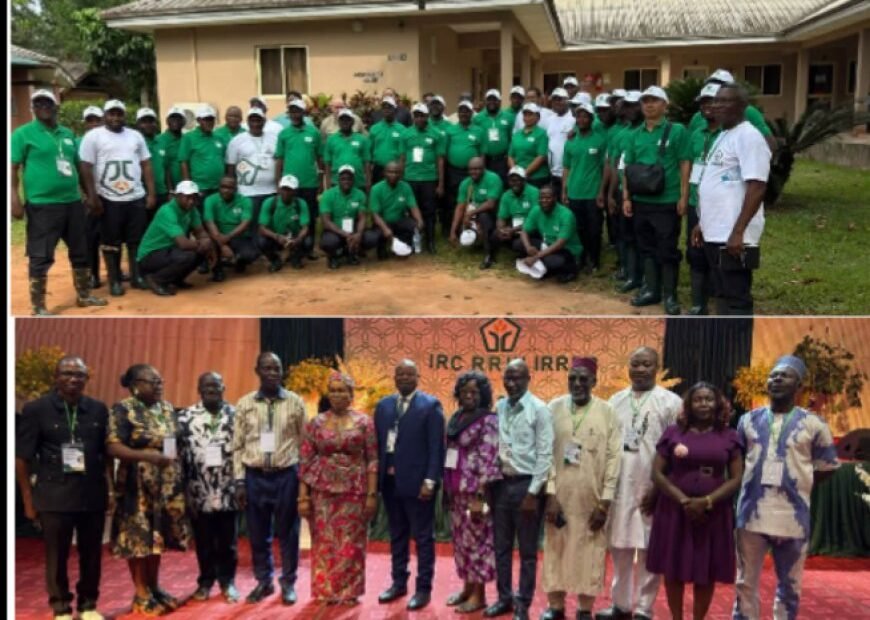
The conference, held from Oct. 19 to Oct. 22 at Cathelea Convention and Suites, Benin City, had the theme: “Sustainable Rubber: Innovations for Climate Resilience and Circular Economy.”
 By Staff Reporter
·
Published on October 24, 2026
·
3 min read
The Rubber Research Institute of Nigeria (RRIN), Benin, has hosted an international rubber conference for the first time in its 66-year history, bringing together more than 200 participants from across the world to explore strategies for revitalising the industry.
The conference, held from Oct. 19 to Oct. 22 at Cathelea Convention and Suites, Benin City, had the theme: “Sustainable Rubber: Innovations for Climate Resilience and Circular Economy.”
Participants came from countries including Thailand, Côte d’Ivoire, Cameroon, Cambodia, Liberia, Myanmar, Ghana and Nigeria.
The event attracted representatives of the National Assembly, federal ministries, research institutions, rubber producers, processors, manufacturers and investors.
In his remarks, Mr Alphonsus Ogar Eba, Chairman of the RRIN Governing Board, lamented the neglect of Nigeria’s rubber industry by successive administrations, saying the country had lost its former leadership position in Africa.
Eba recalled that the late Premier of the Eastern Region, Dr Michael Okpara, laid a strong foundation for the industry through the establishment of several rubber plantations.
He said Nigeria had since fallen behind Côte d’Ivoire and Liberia, while Ghana and Cameroon were intensifying efforts to expand their production.
The chairman urged governments to increase funding for rubber research and production, stressing that the commodity could contribute significantly to economic diversification, industrial development and employment generation.
He called for stronger advocacy and investment to restore the sector’s fortunes under the Federal Government’s Renewed Hope agenda.
The conference featured scientific presentations, panel discussions and exchanges on innovative approaches to rubber production, processing and marketing. Industry representatives from Thailand and Côte d’Ivoire also shared experiences on leveraging rubber to stimulate economic growth.
As part of the programme, delegates visited Okomu Oil Palm Company in Edo State, where they inspected its 5,000-hectare rubber plantation and processing facility.
Eba commended the company’s investment in rubber production and processing, urging greater protection of productive plantations in Cross River.
He expressed concern over reported plans to replace rubber trees at Cross River Rubber Estate with oil palm, arguing that indiscriminate felling of young and productive trees could undermine raw-material supply to local processing industries.
He also questioned the reported approval of more than N600 million for a proposed rubber research institute in Creek Town, saying RRIN had proposed an outstation at Okomita, Odukpani, to serve the South-South region.
The chairman called for engagement with relevant stakeholders to protect viable rubber plantations while allowing the gradual replacement of ageing trees.
RRIN is the Federal Government’s research institute mandated to conduct research into natural rubber, gum arabic and other latex-bearing plants.
The institute organised the conference in collaboration with the International Rubber Research Development Board.
