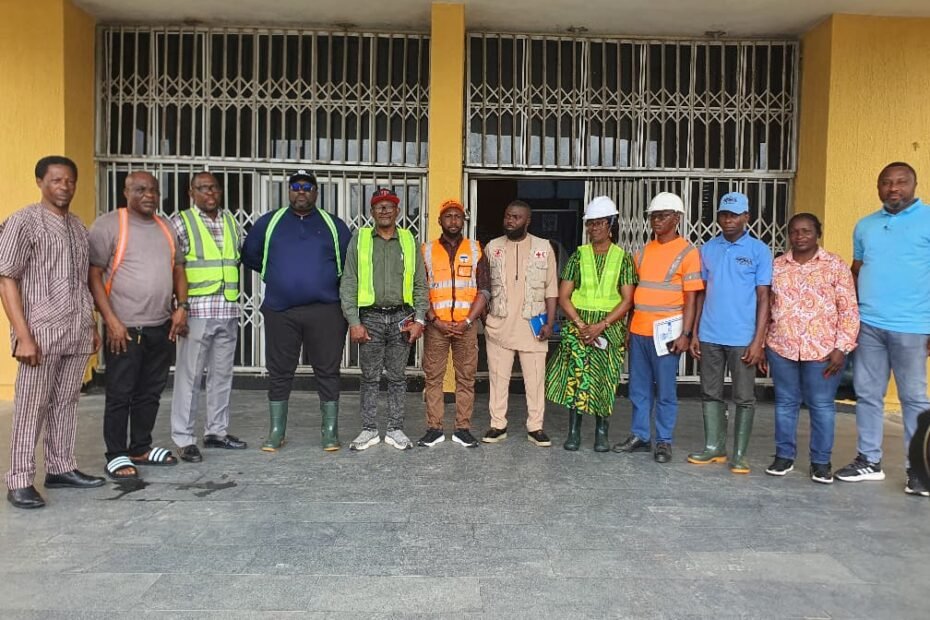
The assessment, which was conducted in collaboration with the Nigerian Red Cross Society, was led by the Director-General of CR-SEMA, Efa Nyong, alongside NEMA’s Acting Head of Operations for Cross River and Akwa Ibom, Austin Awoji, and a Disaster Management Officer of the Nigerian Red Cross Society, Agbor Okim.
 By Staff Reporter
·
Published on September 21, 2026
·
3 min read
By Staff Reporter
·
Published on September 21, 2026
·
3 min read
The National Emergency Management Agency and the Cross River State Emergency Management Agency have commenced an assessment of drainage channels at the University of Cross River State, Calabar, following concerns over persistent flooding in the institution and neighbouring communities.
The assessment, which was conducted in collaboration with the Nigerian Red Cross Society, was led by the Director-General of CR-SEMA, Efa Nyong, alongside NEMA’s Acting Head of Operations for Cross River and Akwa Ibom, Austin Awoji, and a Disaster Management Officer of the Nigerian Red Cross Society, Agbor Okim.
The visit followed a letter by the Vice-Chancellor of UniCROSS, Prof. Francisca Bassey, drawing the attention of CR-SEMA to the poor condition of drainage channels within and around the university and the flooding being experienced in the area.
Representing the Vice-Chancellor, the Deputy Vice-Chancellor, Administration, Prof. Thomas Ogon Ojikpong, thanked the emergency management agencies for responding to the university’s concerns.
Ojikpong described the university’s letter as a “cry for help,” expressing satisfaction that the authorities had responded to the appeal.
He subsequently led the delegation to some of the affected drainage channels, where the team observed extensive siltation, blocked sections and damaged portions of the drainage infrastructure.
In some areas, concrete structures lining the channels had collapsed, leaving sections exposed and allowing water to spill into surrounding areas. The team also observed sections that appeared inadequate to contain the volume of water flowing through them.
The inspection further took the delegation to residential areas around the university, where some houses affected by recurring flooding had reportedly been abandoned by their occupants.
Speaking after the inspection, Nyong said the agencies had seen the situation firsthand and would study their findings to identify practical solutions to the flooding.
He disclosed that efforts were being made to bring in a swamp buggy to assist with the desilting of some blocked drainage channels as part of immediate measures to improve water flow.
The drainage system, according to the assessment, serves as a major waterway carrying runoff from several parts of Calabar, including areas around Marian, the Highway and major parts of Calabar South, before discharging towards the sea.
The officials noted that blockages, damaged sections and inadequate drainage capacity had contributed to water overflow during heavy rainfall, worsening flooding within the university environment and neighbouring communities.
Also speaking, Awoji said he had extensively observed the damage during the inspection and would take the findings back to NEMA for further consideration.
He said the agency would examine the situation and explore possible interventions to address the challenges identified.
The assessment is expected to guide further inter-agency action on desilting, rehabilitation and possible expansion of sections of the drainage system to reduce the impact of flooding on UniCROSS and surrounding communities.
