
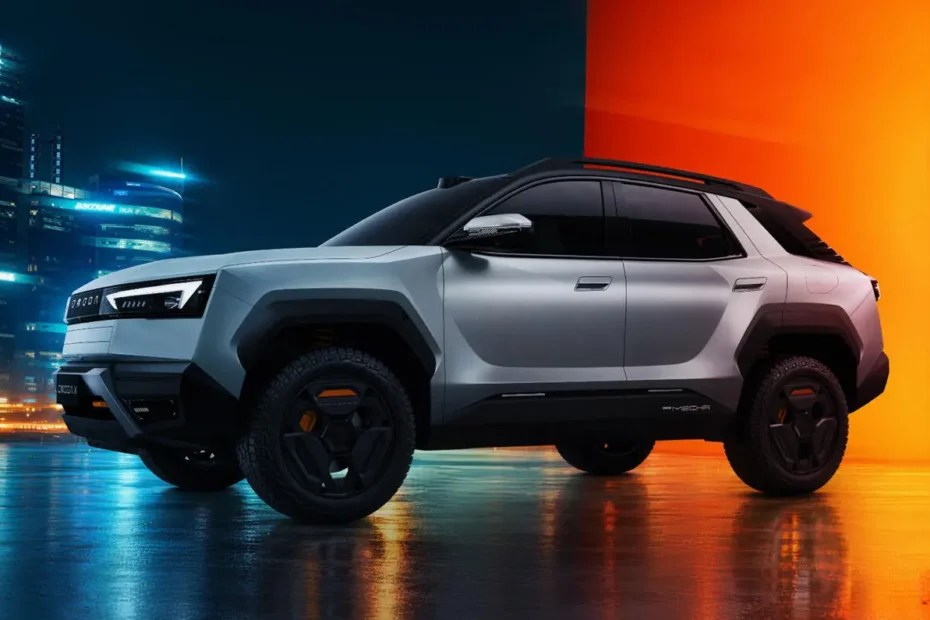
Chery believes Canada is worth investing in independently of its access to the US market.
 By Frank Ulom
·
Published on October 24, 2026
·
3 min read
Chinese carmaker Chery Automobile plans to enter the Canadian market in 2027 and is considering establishing a local manufacturing plant, according to a Bloomberg report published on 23 October.
If the plan materialises, Chery would establish a production base near the United States’ northern border, despite uncertainty surrounding the company’s prospects of entering the American market.
Chery believes Canada is worth investing in independently of its access to the US market. Zhang Guibing, the company’s executive vice-president, disclosed the plans during an interview at its headquarters in Wuhu, Anhui province, China.
He said the company was exploring options, including taking over idle capacity at existing factories and establishing production arrangements with local partners.
“Even without considering the US market, Canada is worth setting up a factory in. We are looking for suitable opportunities and discussing possible forms of cooperation,” Zhang said.
“If we can find an appropriate way to cooperate, allowing Chery and other parties to invest jointly and successfully begin production, I believe the Canadian government would welcome such an arrangement.”
If successful, Chery could become the first Chinese automaker to establish a car manufacturing plant in Canada, marking a significant achievement for Canadian Prime Minister Mark Carney’s efforts to attract investment into the automotive industry.
However, the move could also heighten tensions between Canada and the United States, as automotive industry observers believe Canada could become a gateway for Chinese electric vehicles to enter the American market.
Canada Opens Door to Chinese Electric Vehicle Makers
Canada has gradually adopted a more welcoming approach towards Chinese automakers following an automotive trade agreement with China.
Under the agreement, Canada will allow 49,000 Chinese-made electric vehicles annually to enter its market at reduced tariff rates, with the quota expected to increase over time.
In June, Canada’s Industry Minister, Mélanie Joly, visited China and met representatives of BYD, Geely and Chery. Joly subsequently disclosed that the three companies were willing to explore the possibility of establishing joint ventures in Canada.
However, Joly has outlined conditions for Chinese automakers seeking to establish manufacturing operations in the country.
The companies must use local supply chains, comply with Canadian labour standards and ensure that vehicle software meets security requirements to address national security concerns.
Joly has also ruled out the use of a knock-down assembly model, under which automakers would complete most of the manufacturing process in China before shipping vehicles to Canada for final assembly.
Zhang disclosed that Chery’s vice-president, Zhang Shengshan, had maintained close communication with Joly regarding the company’s plans.
Chery Explores Manufacturing Opportunities Beyond China
Chery already operates internationally and has experience taking over existing manufacturing facilities.
According to reports, the company operates a joint venture factory in Spain and has taken over a Nissan factory in South Africa, transforming it into a production base serving the African market.
The Chinese automaker is also exploring the possibility of using Nissan’s Sunderland plant in the United Kingdom to manufacture vehicles.
Meanwhile, BYD is preparing to enter the Canadian market and has previously expressed interest in establishing a local manufacturing facility.
In September, a Canadian local politician disclosed that BYD had enquired about taking over an idle Stellantis factory in the Toronto suburbs for bus production.
Geely also plans to begin selling vehicles in Canada in 2027, although it has not publicly disclosed whether it is considering establishing a manufacturing plant in the country.
