
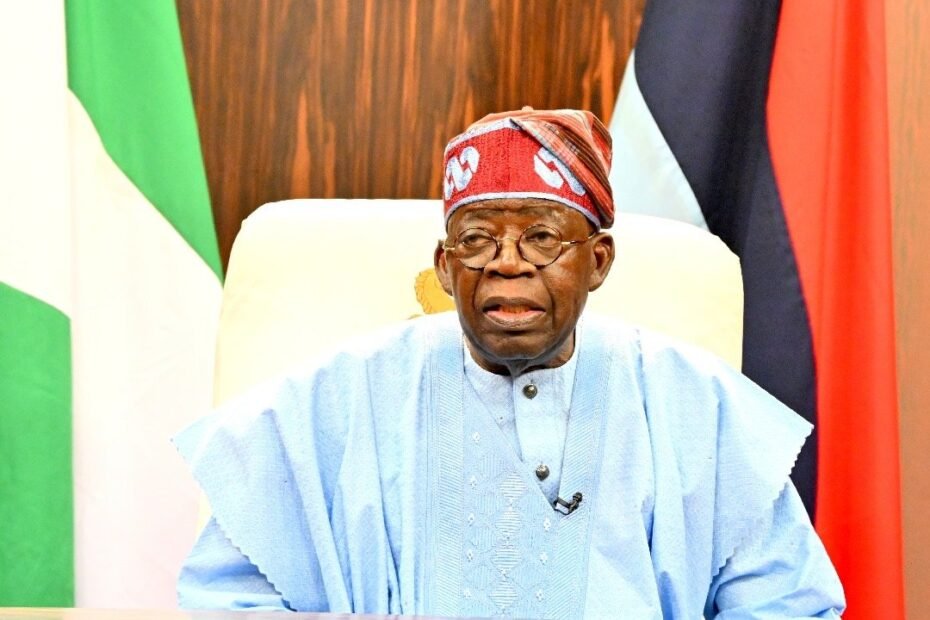
For 27 unbroken years, since May 29, 1999, Nigerians have chosen their leaders through the ballot
 By Frank Ulom
·
Published on June 12, 2026
·
6 min read
By Frank Ulom
·
Published on June 12, 2026
·
6 min read
President Bola Tinubu has defended his administration’s economic and security reforms, reaffirmed commitment to democratic governance, and announced national honours for dozens of pro-democracy activists and military officers during his 2026 Democracy Day address.
In his nationwide broadcast on Friday to mark June 12, President Tinubu described democracy as Nigeria’s most enduring achievement since the return to civilian rule in 1999, urging citizens to remain committed to strengthening democratic institutions and national unity.
“Today, we celebrate democracy and the enduring Nigerian spirit,” the President said. “For 27 unbroken years, since May 29, 1999, Nigerians have chosen their leaders through the ballot, witnessed peaceful transitions of power, and resolved disagreements in courtrooms and legislative chambers—not through violence.”
He called on the Independent National Electoral Commission (INEC), security agencies and political parties to ensure peaceful and credible elections in Ekiti and Osun states, stressing that public confidence in electoral processes remains essential to democratic stability.
The President also appealed to Nigerian youths to contribute to national development by investing their talents and skills in the country.
“To our young people: Nigeria is your home and your future. Build here, code here, work here, and vote here,” he said.
Security gains highlighted
Addressing security challenges, Tinubu acknowledged public concern over the recent abduction of children in Oyo and Borno states but assured Nigerians that government efforts to combat insecurity were yielding results.
He disclosed that his administration had approved the recruitment of more than 50,000 police officers and thousands of military personnel, while allocating N5.41 trillion to defence and security in the 2026 budget.
According to him, military operations have significantly weakened terrorist groups, particularly in the North-East.
“We degraded ISWAP’s command centre in Arege, Borno State,” he stated. “Terror-related deaths are down by 81 per cent since 2015. Over 13,000 terrorists have been neutralised in the past year.”
The President added that more than 124,000 insurgents and their dependants had surrendered through Operation Safe Corridor since 2023.
He warned bandits, kidnappers and terror sponsors to surrender or face the full force of the law, declaring that government would show no mercy to individuals who continue to threaten national security.
Economic reforms defended
Tinubu used the address to defend major economic reforms introduced since assuming office in 2023, arguing that they were necessary to stabilise the economy and restore investor confidence.
He said federation revenues had increased, enabling states and local governments to undertake more development projects, while fiscal transparency had improved and leakages reduced.
The President noted growing investments across agriculture, manufacturing, technology, mining, transportation and creative industries, alongside improvements in domestic refining capacity.
On the power sector, Tinubu highlighted the implementation of the Electricity Act, which empowers states to generate, transmit and distribute electricity independently.
He said efforts were underway to reduce the country’s metering deficit and settle verified legacy debts in the electricity value chain through a proposed N4 trillion bond.
“The Rural Electrification Agency, supported by the World Bank and the African Development Bank, has deployed off-grid and mini-grid power to underserved communities, universities, markets and hospitals,” he said.
The President further revealed that the National Agricultural Development Fund was deploying 10,000 tractors over five years, while more than 1,000 small and medium-sized enterprises had been certified for export.
According to him, non-oil exports grew by 21 per cent last year.
Despite these gains, Tinubu acknowledged the economic hardship faced by many Nigerians and pledged continued efforts to reduce inflation, increase food production, create jobs and improve living standards.
Push for local government autonomy
The President reiterated his administration’s commitment to strengthening grassroots governance through financial autonomy for Nigeria’s 774 local government councils.
He argued that weak local government administration had contributed to insecurity and underdevelopment in many communities.
“Recognising that democracy is undermined when people do not feel its impact, my administration has sought financial autonomy for our 774 local councils,” he said.
Tribute to June 12 heroes
Reflecting on the significance of June 12, Tinubu paid tribute to the late Chief Moshood Kashimawo Olawale (MKO) Abiola and other prominent figures who fought for democratic rule.
He also honoured the memories of Alhaja Kudirat Abiola, Chief Gani Fawehinmi, Chief Bola Ige, Chief Alfred Rewane, Pa Abraham Adesanya, Chief Anthony Enahoro, Alhaji Balarabe Musa, Commodore Dan Suleiman, Dr Beko Ransome-Kuti, Frank Kokori, Arthur Nwankwo, Chima Ubani and Shehu Musa Yar’Adua, among others.
As part of efforts to preserve the legacy of the late Yar’Adua, Tinubu announced the renaming of the Institute of Petroleum Studies in Kaduna as the General Shehu Musa Yar’Adua University of Geological Sciences and Engineering Technology.
The President also unveiled a list of pro-democracy activists, journalists, politicians, lawyers, academics and retired military officers approved for national honours in recognition of their contributions to Nigeria’s democratic struggle.
Among those named were Ayoka Lawani, Tunde Fagbenle, Olatunji Bello, Louis Odion, Segun Babatope, Sam Omatseye, Bola Bolawole, Debo Adeniran, Ayo Opadokun, Joe Okei-Odumakin, Richard Akinnola, Niran Malaolu, Femi Aborisade and Ike Okonta.
Several military officers who supported the June 12 democratic struggle were also recognised, including Major General M.A. Garba, Brigadier General Lawal Jaafaru Isa, Colonel Sambo Dasuki and Brigadier Jonathan Ndam Temlong.
Tinubu said the full honours list would be released in the coming days.
Call for unity
The President urged Nigerians to reject division and remain committed to building a prosperous and united nation.
“June 12 reminds us: Nigerians do not break. We bend, we bleed, but we do not break,” he said.
He added that while Nigeria’s founding generation secured independence and the June 12 generation secured democracy, the current generation must focus on securing economic prosperity for all citizens.
