
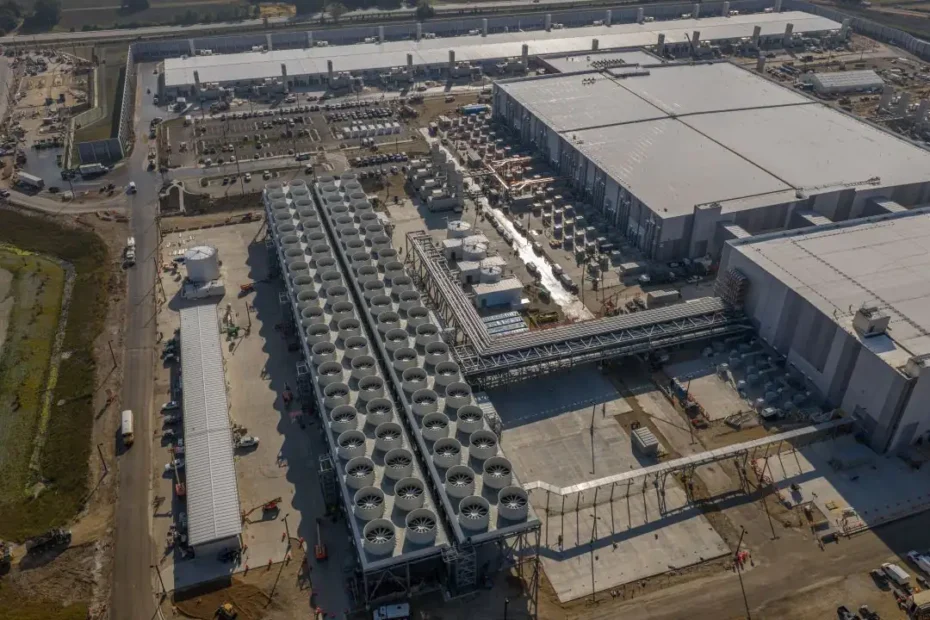
Internal documents show that many Microsoft employees raised questions about the data center’s energy consumption, water usage, carbon emissions, and impact on the local community
 By Frank Ulom
·
Published on August 28, 2026
·
3 min read
By Frank Ulom
·
Published on August 28, 2026
·
3 min read
Microsoft is trying to explain to its employees that the company’s data centers can have a positive impact on society.
According to a Bloomberg report on the 28th, internal documents show that many Microsoft employees raised questions about the data center’s energy consumption, water usage, carbon emissions, and impact on the local community.
Noel Walsh, head of Microsoft’s development business, responded that the rapid development of AI has made it more difficult for Microsoft to meet its established emissions reduction commitments. However, the energy efficiency and water efficiency of data center hardware have improved recently, and the company also plans to build tens of gigawatts of renewable energy projects. “Data centers must be built in a rigorous and transparent manner, and always focused on reducing negative impacts and maximizing positive benefits .”
The AI boom has driven a surge in demand for data centers, but it has also triggered strong social backlash, prompting the tech industry to try to mitigate external resistance. Data Center Watch data shows that in the first three months of this year alone, at least 75 data center projects, worth approximately $130 billion (equivalent to approximately RMB 875.833 billion at the current exchange rate), were halted or delayed due to local residents’ opposition.
Opponents are concerned about both the environmental impact of data centers and the potential for AI to lead to job losses and alter the way society operates. Walsh’s internal memo reveals that at least some Microsoft employees share similar concerns.
Microsoft previously disclosed that its carbon emissions will increase by 25% by 2025 due to the construction of high-energy-consuming data centers. The company has also notified its sustainability partners that it will reduce new carbon credit trading arrangements. Microsoft executives have also considered shelving an ambitious goal of matching renewable energy generation with total energy consumption.
Walsh also outlined improvements in several environmental metrics. Compared to Microsoft’s first-generation data centers, current data centers are nearly 90% more water-efficient, and Microsoft has signed agreements to add up to 40 gigawatts of renewable energy globally. Over 90% of discarded data center hardware is reused or recycled. “The community should share the benefits of AI infrastructure, not bear its costs.”
Faced with growing opposition to data centers, tech companies are ramping up their public relations efforts, making more concessions, and changing how they handle local issues. In January, Microsoft announced it would no longer apply for property tax credits from the communities where its data centers are located, and pledged to cover the electricity costs for its data centers itself to prevent local residents from facing higher electricity bills.
