
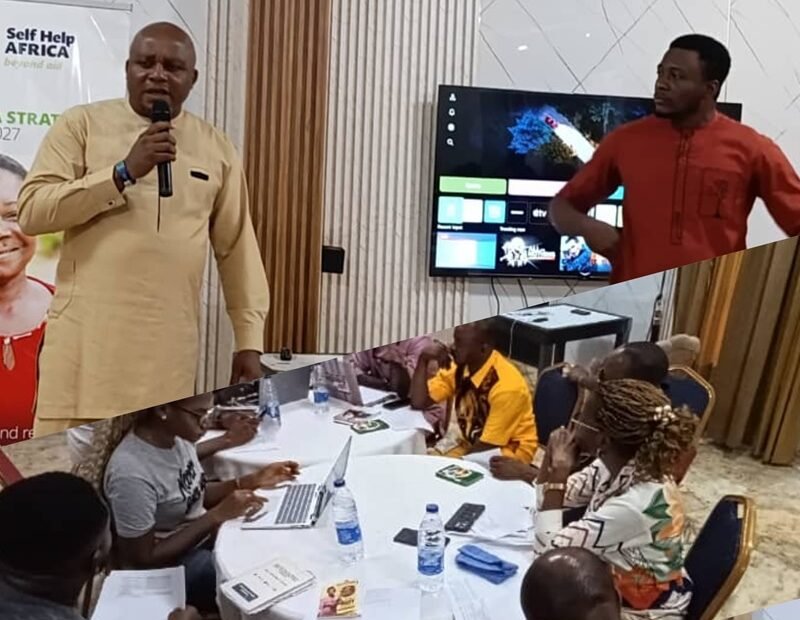
The declaration was made during an outcome harvesting and validation workshop organised by Self Help Africa under its WASH Systems for Health project in Ogoja
 By Clestus Asuquo
·
Published on June 5, 2026
·
3 min read
By Clestus Asuquo
·
Published on June 5, 2026
·
3 min read
Stakeholders in the Water, Sanitation and Hygiene (WASH) sector have commended the impact of interventions by Self Help Africa in Cross River State, with the state government declaring that it now has “no excuse” for failing to achieve universal access to water and sanitation services.
The declaration was made during an outcome harvesting and validation workshop organised by Self Help Africa under its WASH Systems for Health project in Ogoja, Cross River State.
Speaking at the workshop, the Commissioner for Water Resources, Barr. Bassey Mensah, represented by the Head of the WASH Regulatory Department, Felix Irek, said the project had significantly strengthened institutional frameworks and policy implementation within the state’s water sector.
According to him, the organisation’s support in developing and sponsoring critical WASH policies has laid a solid foundation for sustainable water governance and improved service delivery across the state.
“For us in the Ministry of Water Resources, as the lead WASH sector agency, we feel privileged to have had the WASH Systems for Health project implemented by Self Help Africa. Over the years, we have witnessed several interventions, but the impact of this project has been exceptional,” he said.
Mensah noted that the reforms introduced through the project had positioned the state to effectively tackle water and sanitation challenges, adding that there was now “no excuse” for Cross River not to attain total coverage in the sector.
The workshop brought together officials from ministries, departments and agencies, academics, local government representatives and development partners to assess and validate achievements recorded under the project and discuss strategies for sustainability.
Earlier, the State Coordinator of Self Help Africa, Ferdinand Anok, recalled that the organisation began engaging with the state’s WASH sector in 2014 following a comprehensive assessment that identified systemic challenges hindering effective service delivery.
He said the findings from the assessment guided subsequent interventions, which focused on strengthening institutions, building capacity and supporting evidence-based policymaking.
“We started this journey with a visioning workshop aimed at examining the state of the WASH system in Cross River. The assessments conducted at the time provided a baseline for all our interventions and ensured that decisions were driven by evidence,” Anok said.
He stressed that while Self Help Africa provided technical and financial support, ownership of the programme remained with the Cross River State Government.
Also speaking, the General Manager of the Rural Water Supply and Sanitation Agency, Sunday Oko, represented by the agency’s Programmes Manager, Ebit Bassey, said the project had increased awareness and prioritisation of WASH issues across the state.
He noted that the absence of relevant policy documents in the past had prevented Cross River from accessing key national and international funding opportunities, a challenge that had now been addressed through the organisation’s interventions.
“No one talked about WASH during the previous administration, but today it has become a major issue of discussion across the state, courtesy of Self Help Africa,” he said.
The WASH Coordinator for Yala Local Government Area, Williams Agbor, also attributed the revival of previously non-functional water facilities to the capacity-building initiatives introduced under the project.
He said local institutions had been strengthened to sustain the gains recorded and urged future administrations to continue supporting the reforms.
The workshop concluded with stakeholders validating key project outcomes and reaffirming their commitment to sustaining efforts to improve water and sanitation services across Cross River State.
