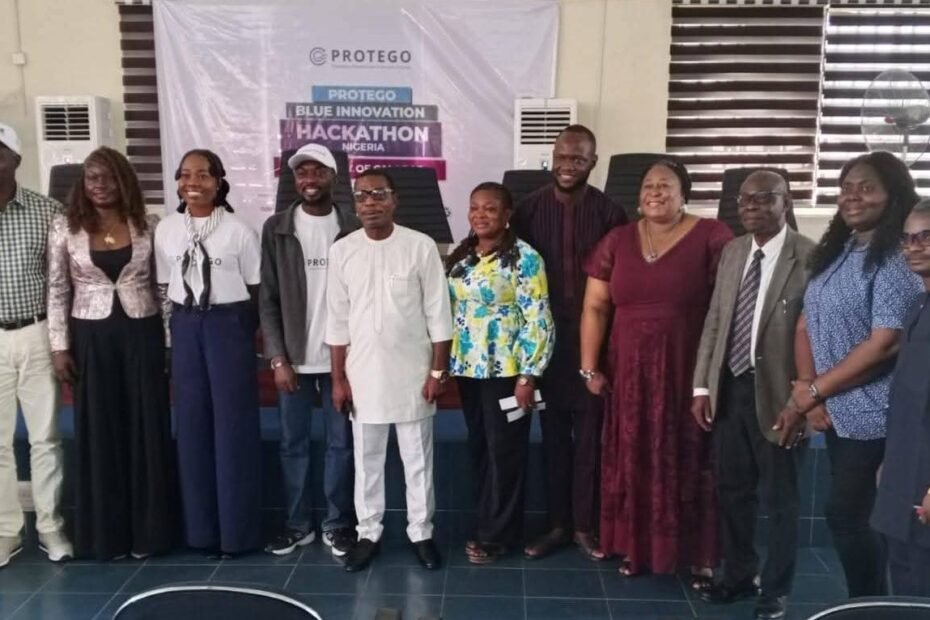
Blue Innovation Hackathon organised by the PROTEGO in collaboration with the Institute of Oceanography, University of Calabar, at the institution’s Senate Chambers.
 By Staff Reporter
·
Published on November 12, 2026
·
4 min read
The Vice-Chancellor of the University of Calabar (UNICAL), Professor Offiong Efanga Offiong, has expressed the institution’s readiness to deepen its collaboration with PROTEGO in exploring innovative ways of converting plastic waste into useful products, including petrol.
The Vice Chancellor made this known while delivering his remarks at an awareness campaign on Blue Innovation Hackathon organised by the PROTEGO in collaboration with the Institute of Oceanography, University of Calabar, at the institution’s Senate Chambers.
Represented by the Deputy Vice Chancellor, Research, Linkages and Collaboration, Professor Anthony Eneji, the Vice Chancellor expressed appreciation to the organisers for their interest in promoting blue innovation and developing sustainable solutions to environmental challenges.
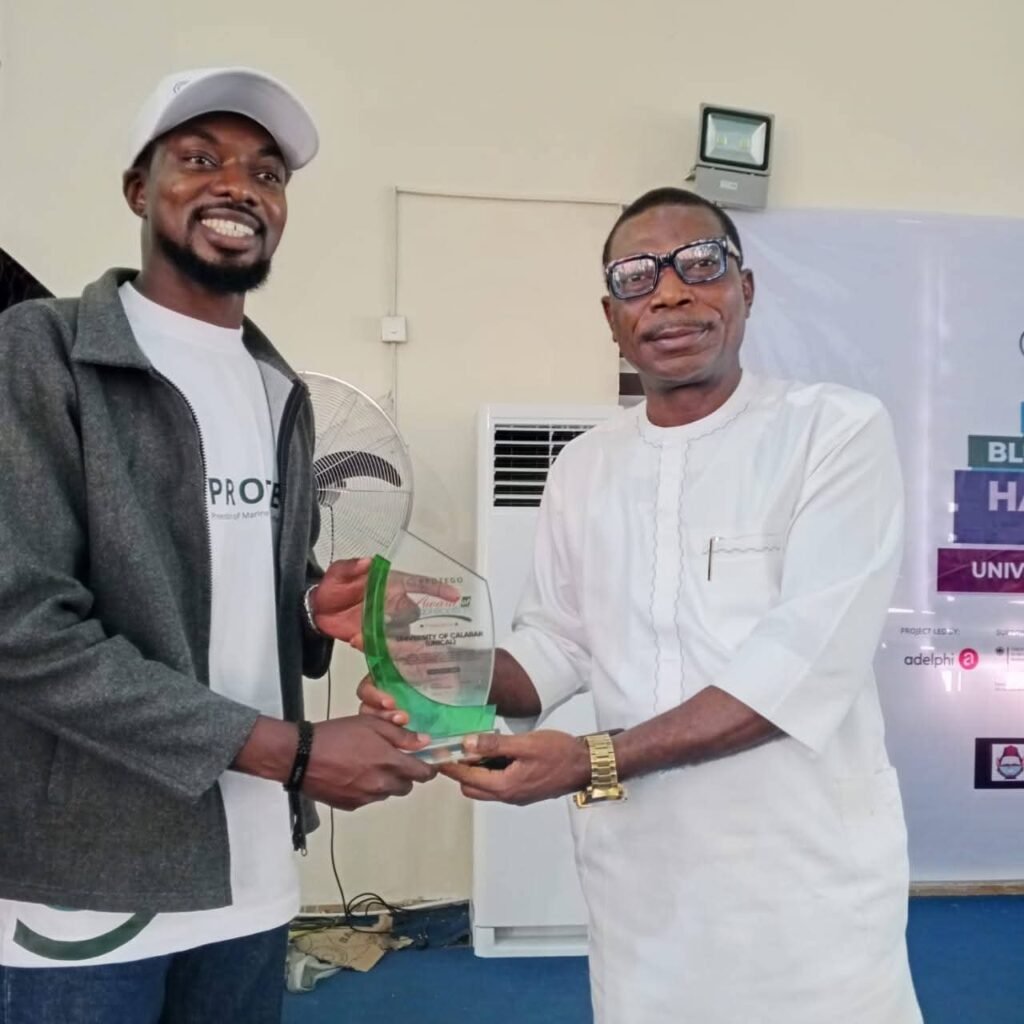
He commended PROTEGO for going beyond efforts to clean up the coastal environment to exploring innovative ways of converting plastic waste into useful products, including interlocking tiles.
Prof. Offiong noted that the University of Calabar was already utilising plastic waste as raw materials for the production of different items, adding that the institution would be delighted to expand its partnership with PROTEGO, particularly in the area of converting plastic waste into petrol.
He reiterated the university’s commitment to research-driven partnerships, stressing that the institution remained open to collaborations that promote innovation, knowledge transfer and sustainable development.
The Vice Chancellor also urged students to pay keen attention to the presentations and actively participate in the programme, describing it as an opportunity to broaden their knowledge and develop practical solutions to environmental challenges.
Speaking at the event, the Project Representative of PROTEGO: Prevention of Marine Litter in the Gulf of Guniea and Programme Manager, WASTE Africa, Mr Gabriel Onyebuolise, said the PROTEGO Blue Economy Innovation Hackathon 2026 was designed to address marine pollution and protect Nigeria’s coastal ecosystems, with particular focus on Lagos and Cross River States.
He explained that the initiative was organised under the PROTEGO Project led by Adelphi research with her implemented partners including WASTE Africa, the Nigeria Climate Innovation Centre (NCIC), Plastic Punch and Ghana National Cleaner Production Centre.
The Project Representative said Hackathon seeks to encourage undergraduate students in recognised universities across Lagos and Cross River States to develop practical, homegrown innovations to address the growing challenges of plastic pollution and marine litter affecting coastal communities.
Onyebuolise added that, the programme formed part of broader efforts to promote youth-led innovation in Nigeria’s blue economy while advancing sustainable waste management solutions for coastal communities.
In his words, ”Our goal remains simple to say but hard to achieve. It is to significantly reduce plastic waste leaking into our oceans. We do this by promoting circular economy solutions, strengthening policy, and raising public awareness like this one.”
He highlighted the four pillars of PROTEGO work packages to include mapping, pilot solutions, capacity building and awareness.
A Senior Research Fellow at the Institute of Oceanography, University of Calabar, Professor Philomena Edet Asuquo, gave a presentation on the theme, “From Gutter to Gulf: The Journey of Plastic through Nigeria Waterways; How Waste Moves from Street and Drains through Canal and Lagoons into the Gulf of Guinea and where it can be stopped.”
Another presentation was made by a Professor of Fisheries Biology at the Institute, Prof. Udeme I. Enin, who spoke on the theme, “From Idea to Impact: What it Takes to Turn a Student Innovation into a Real Solution; Lessons on Prototyping, Piloting, Funding and Scaling.”
The event also featured goodwill messages by representatives of relevant stakeholders, including the Cross River State Ministry of Environment.
