
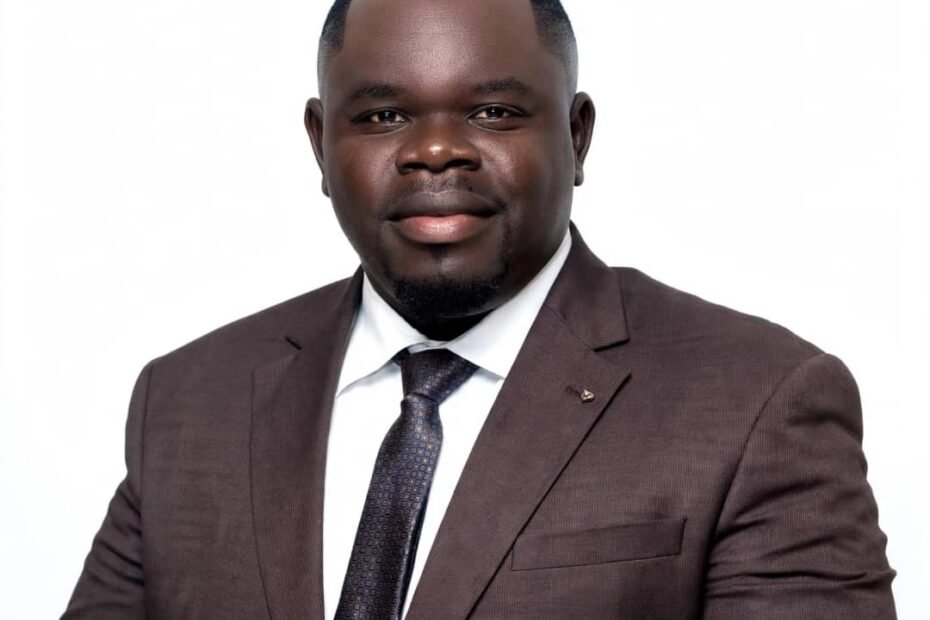
The Supervisor for Works and Infrastructure, Akamkpa Local Government Council, Elder Abednego Okon, made the observation while assessing the administration’s approach to the state’s debt burden, infrastructure deficit and investment prospects.
 By Staff Reporter
·
Published on September 29, 2026
·
8 min read
By Staff Reporter
·
Published on September 29, 2026
·
8 min read
The economic intervention of the Cross River State Government under Governor Bassey Edet Otu, particularly its deliberate effort to confront inherited liabilities while recovering and revitalising dormant public assets, has been described as a potentially transformative shift in the state’s economic management.
The Supervisor for Works and Infrastructure, Akamkpa Local Government Council, Elder Abednego Okon, made the observation while assessing the administration’s approach to the state’s debt burden, infrastructure deficit and investment prospects.
According to him, the significance of the Otu administration’s economic strategy lies not simply in what the government is constructing, but in its decision to first confront the consequences of investments that have already consumed enormous public resources.
His position comes against the backdrop of recent comments by former Cross River State Governor, Senator Liyel Imoke, who, in an interview with ARISE News, discussed the enormous financial burden Tinapa placed on the state. Imoke said the state had incurred a debt liability connected to Tinapa that at one point was taking more than 50 per cent of the state’s revenues.
That reality, Elder Okon noted, gives greater significance to Governor Otu’s decision to recover Tinapa rather than allow the facility to continue deteriorating after billions of naira had already been committed to it.
Reclaiming What Already Belongs to the People
Governor Otu’s administration announced in February 2025 that Cross River had taken back possession and management of Tinapa following an agreement with the Asset Management Corporation of Nigeria, AMCON. The state government had earlier lost control of the resort after AMCON took over in 2013 following an agreement involving Tinapa’s debts.
For Elder Okon, the decision to reclaim Tinapa represents a fundamental economic principle: an indebted government cannot afford to abandon productive assets simply because they have become difficult to manage.
He argued that the rational response is to restructure, rehabilitate and reposition such assets so that they can eventually begin contributing to the economy.
“Governor Otu has demonstrated an understanding that we cannot continue to borrow or spend heavily on new projects while existing government investments are lying idle and deteriorating,” Elder Okon said.
He described this as a departure from what he called the traditional mentality of pursuing “big ticket” projects for their visibility while existing infrastructure is crying for attention.
Rather than continually announcing new mega-projects, he said, the administration appears to be asking a more fundamental question: How can Cross River extract economic value from what it already owns?
That, according to him, is a question with significant implications for the state’s financial future.
From Tinapa Liability to Economic Asset
Governor Otu has publicly linked the decision to revive Tinapa to the enormous investment already committed to the resort. In July 2026, the Governor said more than $400 million had been invested in Tinapa over the years and that abandoning the facility would amount to allowing a massive public investment to deteriorate. He also disclosed that rehabilitation was ongoing and that an anchor tenant had committed to operating at the facility.
The state government has also disclosed discussions with the Nigeria Export Processing Zones Authority, NEPZA, as part of efforts to reposition Tinapa and strengthen its investment potential. The government said an American company was preparing to commence operations at the resort.
For Elder Okon, this is where the economic argument becomes particularly compelling.
A functioning Tinapa could generate activity far beyond the walls of the resort itself.
Hotels would benefit from increased occupancy. Transport operators would have more passengers. Restaurants, artisans, traders and suppliers would have a larger market. Security and facility management services would expand. Local farmers could find new markets for agricultural produce. Construction and maintenance activities would create additional demand for skilled and unskilled labour.
More importantly, successful operations could help reposition Cross River as a destination for investors looking for access to tourism, hospitality, agriculture, manufacturing, logistics and export-oriented businesses.
“An investment does not become successful merely because money has been spent on it. It becomes successful when that investment begins to circulate money through the wider economy,” Elder Okon observed.
The Bigger Economic Picture
The Supervisor said the same philosophy should be applied to other abandoned or underutilised public infrastructure across the state.
He commended Governor Otu for prioritising the rehabilitation and completion of critical infrastructure rather than making the accumulation of new projects the primary measure of development.
Recent statements by the Governor indicate that the administration has deliberately prioritised completing and reviving inherited projects before embarking on some new large-scale ventures. Governor Otu has attributed the approach partly to the state’s limited fiscal resources and the need to protect existing public investments.
Elder Okon said this approach could prove important to debt management because every abandoned project represents more than a physical structure.
“It represents money already spent, debt possibly incurred, land already acquired, opportunities already lost and expectations already created,” he said.
“Reviving such a project can therefore be more economically rational than starting another project from the beginning.”
This is particularly relevant to a state carrying substantial inherited liabilities.
An August 2026 assessment published by the Cross River State Government cited figures showing that the state’s domestic debt had fallen from approximately ₦204.05 billion in June 2023 to about ₦132.30 billion by March 2026. The same assessment noted that the state still carried significant external obligations.
Against that background, Elder Okon argued that debt reduction and asset recovery should not be treated as separate economic policies.
They are two sides of the same equation.
A state that reduces its liabilities while simultaneously restoring the productive capacity of its assets creates the possibility of moving from debt servicing to revenue generation.
What Happens When the Investors Arrive?
Elder Okon said the most important test of the administration’s economic intervention would ultimately be what happens when the investors currently negotiating with the state move from discussions to actual operations.
If the anticipated investments materialise, he said, the effect could be significant.
“Imagine a situation where Tinapa is fully operational, investors begin production and commercial activities commence at various facilities across the state. The immediate beneficiaries will not only be the companies. The economic activity will travel through the communities,” he said.
Workers will earn incomes. Businesses will supply goods and services. Government will collect legitimate taxes and fees. Land and property values around productive economic corridors can rise. Transport networks will become busier. Demand for accommodation, food, logistics, security, maintenance and professional services will increase.
The resulting economic activity could broaden the state’s revenue base and reduce dependence on federal allocations over time.
But Elder Okon cautioned that investment announcements should not be confused with actual economic outcomes.
“What Cross River needs now is not merely investors on paper. We need investors who will establish operations, employ people, produce goods and services, pay taxes and remain here long enough to create an economic ecosystem.”
A Different Way of Thinking About Development
For Elder Okon, the deeper significance of Governor Otu’s intervention is therefore philosophical.
He believes Cross River must move away from measuring development principally by the size and cost of government projects.
“The real question should be: what does this investment produce after it is completed?”
A modest infrastructure project that enables farmers to move produce to market, he argued, may have greater economic value than an expensive monument that produces no revenue or employment.
Similarly, restoring an existing industrial or tourism asset to productive use may create more immediate economic value than committing scarce resources to another ambitious project.
He said Governor Otu’s emphasis on reviving existing assets should therefore be understood within the broader challenge of rebuilding a state economy burdened by years of accumulated liabilities and underutilised infrastructure.
The Tinapa Test
Ultimately, Elder Okon believes Tinapa will remain one of the clearest tests of whether Cross River can convert its historical investments into future economic value.
The resort was conceived as a major tourism and commercial investment, but its history also became intertwined with debt, financial obligations and questions about infrastructure and access. Imoke recently said unresolved infrastructure and regulatory conditions, including challenges around the airport and seaport, contributed to the failure of AMCON’s proposed revival investment.
Governor Otu’s decision to reclaim the facility, rehabilitate it and seek new investors therefore carries consequences beyond Tinapa itself.
If the project becomes commercially viable, Cross River could demonstrate that an asset once associated heavily with public debt can be repositioned as an engine of economic activity.
That, Elder Okon said, would be more than the revival of a resort.
It would represent the beginning of a different economic conversation in Cross River: from how much government has spent, to how much value government assets can now create.
And for a state seeking to reduce its debt burden, increase internally generated revenue and attract private capital, that may ultimately be the more important measure of economic renewal.
