
But yes, house is a thing, African Afro-pop is a thing, R&B and just even like on the African continent there’s some artists who make straight-ahead R&B, they make straight-ahead hip hop, and then some things are infused with traditional African sounds.
 By Staff Reporter
·
Published on September 11, 2026
·
19 min read
By Staff Reporter
·
Published on September 11, 2026
·
19 min read
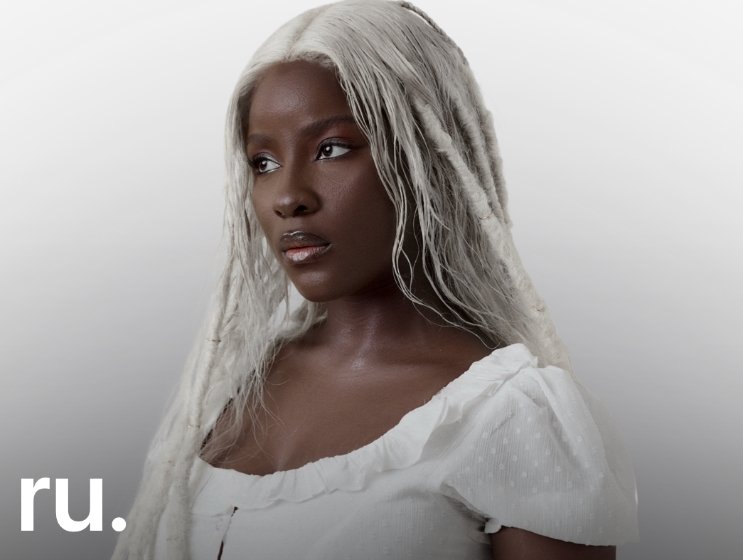
Singers ru. and Ebro Darden have expressed why African artists shouldn’t be boxed into just Afrobeats genre of music, as many make RnB, Hip Hop, Pop music.
Below is the full transcript of the interview:
— Segment 1 —
[Host, 00:00:] Rue!
[Rue, 00:01:] Hi. Thank you so much for having me.
[Host, 00:03:] Nah, thank you for being you and thank you for taking time out to be our Africa Rising artist right here on Apple Music. So, first, it’s a pleasure to meet you and congrats on everything that you’re expressing and creating and sharing with the world. So, I know that’s a big deal.
[Rue, 00:20:] It is, it is.
[Host, 00:21:] You know, it’s our first time meeting. I just want to give you space so the audience can learn why this moment in time is so important to you and what’s going on with you.
[Rue, 00:31:] Okay, so I guess the first thing would be that I just released my debut EP called Silk. It’s honestly a turning point for me. I’m still a baby artist and getting the opportunity to do this and on the level that I was able to do it at is crazy, genuinely crazy. I’ve gotten the best feedback ever. I think art is usually open to interpretation, but just having people get exactly what I intended for them to get from the work is humbling. It makes me feel like I’m communicating well, I’m expressing myself well, and it’s really such a big testimony. And yeah, there’s so much. I’m really just happy that people are getting to meet me, getting to know me, and giving me a chance at all. I don’t know if there’s anything else, but…
[Host, 01:21:] No, that’s it. That’s a great starting point. I also want to point out, too, the beauty of the EP title, which is Silk, which is obviously a fabric that the world loves. And I read that the reason you chose it was not just for that reason, but what was the other reason?
[Rue, 01:41:] Okay, so it’s a paradox, right? So silk is soft to the touch, it’s shiny, it’s glistening, like most girls or most women, you expect that, you know. We’re very fragile, you know, but spider silk actually rivals steel in strength. And so I thought it was the best metaphor to kind of show that dual personality and how that can exist at one time, at the same time, in one person. You know, Silk is basically documenting my story of becoming. And these are like themes I’ve noticed that are coexistent. I don’t know how to explain it. They’re happening at the same time. And it was the best metaphor to kind of explain all of that.
[Host, 02:27:] I’ve heard from women in my family throughout the years who have talked about that duality, right, of being able to be, as your song says, a girly girl, but also having a duty to either family or to self to at times also be able to be, like you said, strong as steel. And doing both is taxing. It’s exhausting. And especially if the world around you doesn’t appreciate what it takes to do both things. You know, you yourself at this point in your life, are you feeling that pressure as well? The kind of the daunting task of the duality.
[Rue, 03:13:] You know, yes. Yes. First of all, I will say yes. Songs like Woman or Girly Girl or even Entertainer or Colors of Falling are talking about those pressures. You know, Silk is almost like introducing myself to people and the space I’m at currently. These are the questions I’m asking. What’s my purpose? What was I called here to do? Because why does it feel crazy? Why do I feel underestimated, underappreciated? Like, what exactly is happening here? I know I’m not… you know, because I know I’m not an afterthought. So what was God’s intention when he was making me? You know, so these are the questions that are making these songs come. So the songs are coming from the questions, the answers, and my acceptance of all of these things at the same time. You know, it’s definitely crazy out here as a woman, as a woman in this time. And then I find that a lot of people are trying to morph into something they’re not. And I just want to embrace that softness. I want to embrace being girly, being free to just do what I want, chart my course myself as I see fit, you know, without having societal pressure or status quo, you know, just like the pressure of all of that blinding me or stopping me from doing what I think I can.
[Host, 04:36:] You are standing on the shoulders of giants, not just our African ancestors and, you know, Black people around the world who have come before you and been able to articulate emotions and feelings and sounds similar to yourself and write beautiful songs, but also just as a Black woman and specifically as a Black woman from Nigeria. Even right now with everything going on in Nigeria, you know, women often lead the way in the household and in the community, which is once again a daunting task and something that is very depleting emotionally and physically. Have you had a chance to stop and even enjoy the fact that as a profession, unlike most people, you get to actually find words to help you sort through all of the things you’re going through? For like, that is… has that set in for you yet? And have you seen any of the kind of like emotional benefit of having that outlet?
[Rue, 05:43:] To be honest, yes. I keep on telling people that most of these songs, or whether it’s poetry or whatever form the words come in, I think they’re gifts because not everyone can really just, like you said, express themselves in a very concise way. And for most of the songs I’ve gotten, I feel like they just came. I didn’t struggle. And authenticity is so important because once you can be honest about the journey, I think it comes out stronger and people believe you more because people can see right through you, you know. And when you just stay true to the process, your experience and all of those things, it comes through stronger and clearer. It’s definitely a blessing. It’s easy to explain. It’s almost like I’m showing you pictures and frames, a piece of my diary, without having to come sit in front of you and say, “Oh, this is me, this is my experience.” And it just makes life so much easy, easier. It takes the burden off of me as well, just emotionally, you know, the struggles I’m going through. And it also makes me feel like I’m reaching out to people who don’t necessarily have the words, who need the guidance as well, or who can benefit from maybe the lessons I’m learning. So these are the few things I would say that have been benefits so far.
[Host, 06:57:] There you go. Listen, the fact that you can see them right in front of you and, you know, you’re doing it for the right reasons, right? You’re doing it to… for discovery of self as well as helping others, you know, cope and deal and find a path in dealing with the world around them. Silk is the EP, five joints. She has three other singles: Woman, I Think I Love You, and I Think I Love You Too. So you’re building your catalog very nicely. And you’re all part of a select group of amazing artists from Africa representing all the genres from the continent since 2020. Apple Music’s artist development program, Africa Rising, trying to, you know, help highlight amazing songwriters, artists, talents that we can, you know, help people discover. So we thank you for, you know, being amazing and agreeing to participate in our Africa Rising program.
[Rue, 07:53:] You know, it’s such an honor. I don’t know why you guys keep thanking me, and I feel like I should be thanking you. But yeah, it’s been such an honor. And I’m really so floored and just so glad that you guys see me, you see the work we’re putting in, you resonate with what I’m doing, and you’re giving me an opportunity to reach a wider audience. It means the world to me and I’m so grateful.
[Host, 08:15:] Well, keep going, and we’re going to be here as far as… as long as you keep giving us records to play, we’re going to keep playing them. I love the tempo, I love the energy, I love the songwriting, I love the vulnerability, I love all of the aesthetic and vibes that you’re giving us. Like, it’s not just one thing or one sound. I’m loving all of it. So Rue, keep going.
[Rue, 08:39:] So this is telling me that you actually did listen to the project.
[Host, 08:44:] Why, you do interviews they didn’t listen, right?
[Rue, 08:47:] Oh, sometimes I can tell. I can tell that they haven’t necessarily listened because I’m like, “Hmm.”
[Host, 08:52:] Well, no, because you definitely, look, you’re, like I said, different tempos. A lot of projects I go into and you can tell that an artist is kind of comfortable in one space. Then you have records where the backgrounds are very pop. Like, you’re giving us pop backgrounds and pop vocals and pop sounds across some dope percussion. But then things are drier, right? Like it’s very like, okay, I didn’t give it… like on, I think it’s… is it Adam or Fallen? It feels more personal. It’s very like, you know, like I can hear your voice more, right? There’s not a lot of processing on the voice, which I was waiting for that too, and I think that’s a powerful way to connect, right, where we can hear more of the timbre in your voice and we can hear, you know, it’s not necessarily so… what’s the word I’m looking for? As much processing on the microphone, right? Like I can tell you guys changed in different… but for the purpose of us, the listener, feeling something different from your vocal instrument, I’m checking all of that. So I appreciate that. And whoever you’re working with, producers, people doing your mixing and mastering and all that, they’re really tapped in. So different frequencies, and that’s dope. So stay on that.
[Rue, 10:09:] Yeah, for sure. I definitely have the best creative team, management team, team, period. Because I don’t know, I’m so grateful and I think they’re doing an amazing job because I wouldn’t be able to achieve half of what I’ve done so far without them and I’m so grateful. But I do have a question for you.
[Host, 10:28:] Yes, ma’am.
[Rue, 10:29:] So if you were to… what’s the word? I don’t want to say put me in a box or like label a genre for my kind of sound based off Silk, what would you say?
[Host, 10:41:] I would say…
— Segment 2 —
[Ebro, 09:59:]
It’s… I would say it’s what they’ve been calling it, which is more like an Afro-pop, right? Because clearly it’s, you know, based in African sounds. It’s not attempting to be… it’s not like pushing directly at R&B or directly at, you know, dance music or directly at these other kind of tempo sounds. It’s landing right in that, you know, kind of African pocket. You know, which on this side of the globe, some people they use… what’s the term they use at them parties, man, I hate it, man. What’s the word they be using? Like tropical house or some stupid shit. I hate that shit. What is that? Some weird like ambiguous thing where they put like uptempo African music and they’ll be like, “It’s tropical.” And I’d be like, “What the fuck is that?”
[Guest 1, 11:02:]
I don’t think I’ve ever heard that before, tropical house. I have heard house though, but not tropical house.
[Ebro, 11:07:]
Well yeah, but house… and by the way, house is black music that’s a different thing from Chicago and from Detroit and from other originating from other black experiences and communities in North America. But yes, house is a thing, African Afro-pop is a thing, R&B and just even like on the African continent there’s some artists who make straight-ahead R&B, they make straight-ahead hip hop, and then some things are infused with traditional African sounds. And I appreciate when someone, an artist like yourself and others, they infuse that geography sounds in with modern things. And that’s what you’re doing on this project. So it’s rooted in something that is near and dear to your heart and where you come from, and that way we connect to it through that lens. And I think that’s important. But it definitely still has pop appeal, right? It’s definitely not too hard for, you know, people who may not understand the connective tissue that you’re delivering in the percussions and the sounds, it’s still easy for them to get to it through the melodies, the lyrics, and the backgrounds and things like that. So no, you’re nailing it. It’s really like an Afro-pop sound, or Afro-soul, Afro-pop, Afro-soul. It’s what… and I think that’s the right term, right?
[Guest 1, 12:01:]
Somewhere in there.
[Ebro, 12:02:]
I think that’s the right term, right? You know, I wish it was easier. I personally wish we could just call it, you know, all like R&B and soul no matter where it was from, or we call it, you know, Afro-pop or whatever… but people are very sensitive to their geography. You know what I mean? Just like when you get down in the Caribbean, you know what I mean? People who love soca, they’re not gonna just let you talk about it as reggae. You know what I mean? Like, no, this is our thing and this is the name of it. You know what I’m saying? So I’m very sensitive to that too. So I think that’s why I would land on Afro-pop and Afro-soul.
[Guest 1, 12:09:]
Okay, cool. It was so nice to meet you, Ebro though.
[Ebro, 12:11:]
Now do you… would you… I know for a while in West Africa, the R&B-leaning sounds people were calling it Alte, right? Is that still a thing as the sounds evolve and…
[Guest 1, 12:21:]
Oh yeah, it’s… we would still… there’s still some sounds we would classify as Afro-R&B, but there’s also Alte, right? So it’s a bit… so I think Alte is usually for the ones you can’t really identify, maybe experimental sounds, things that sound… yeah, things that sound more… I don’t want to say weird, because I’d like to say odd, because they’re just unique, right? And then you don’t really have things that sound like that to classify it with. So alternative is usually just for, I would say, the undiscovered genres, right? New sounds, fresh ideas.
[Ebro, 12:45:]
I think it’s similar here in North America too, where you make… like people will call something like alternative hip hop if it’s… has ingredients that don’t neatly fit into a certain category.
[Guest 1, 12:59:]
Exactly. Some different flavors, exactly. Exactly.
[Ebro, 13:06:]
It does feel, and this is I think should be a marker in the calendar, it does feel as if people outside of Africa, ’cause I know people in Africa weren’t having this issue, but people outside of Africa were calling everything from Africa Afro-beats. It feels like we have gotten people to get their brains wrapped around the fact that everything from Africa is not Afro-beats. Would you agree?
[Guest 1, 13:35:]
Definitely, a thousand percent. Not everything from here is Afro-beats, and I think we’ve been labeled that way because we’re from here. And so it’s almost like, so everything you produce, since it’s coming from there, should be Afro-core, but I think artists have also become boxed in because of that and feel like they don’t have a lot of options. But artists really just want to experiment and be who they are without having to worry about these things. A lot of Nigerian artists really want to please their immediate audiences truly, but what if they’re not Afro-beats artists? Like, why is that such an issue? Why?
[Ebro, 14:12:]
Well no, I agree. I don’t think it should be an issue. I just think that people didn’t know what language to use. And then, right, so unless we… unless people… and by the way, me, I would just be like, “No, it’s hip hop, it’s not Afro-beats,” or “No, that’s R&B, that’s not Afro-beats,” or “No, that’s…”
[Guest 1, 14:28:]
Exactly. ‘Cause it’s music period, you know, regardless of where we’re from.
[Ebro, 14:32:]
That’s right. But you did say there are sensitivities, you know, where the geography is concerned. So maybe, like you said, it’s just a label thing and catering to those sensitivities.
[Guest 1, 14:43:]
Yeah.
[Ebro, 14:44:]
But well yeah, and then there’s just… well yeah, then there’s just people who, especially on the business side, more than the artist side. So the business and commerce and marketing side, and I experienced this for years, you know, just being in the media in North America, they pick categories, the record labels and or advertisers, they pick categories that help them sell things to people. So whatever the popular category might be for the for the people not in the industry, right? The regular-degular folks that just know, “Oh.” And so for marketing people they go, “Well, let’s call it this thing so that people not in it can actually understand what they’re buying.” Right? So you know, the fight is always on the creatives and the artists to help the audience understand better, and then the business and the marketing people catch up after that.
[Guest 1, 15:34:]
Mm-hmm, right. A thousand percent, actually.
[Ebro, 15:38:]
Yeah. So your connection with your fans and teaching us what you see yourself as, and so that way it’s not about what we’re hearing, it’s about what you’re telling us. And then take us… and then you take us on the journey and tell us how to learn and and how to hear, right? Because as as fans and music lovers, I think sure you would think this way too, like when you go to a restaurant and you’ve never been before and you’re like, “What kind of food is it?”, right? You love food, right? You love food. Like if somebody’s like, “Do you love food?” you’d be like, “Yes!” And then they were like, “Okay, but what about this kind?” You’d be like, “Ah.” “What about this kind?” “Okay.” But now you might walk into a restaurant and it might be a fusion, right? But you want to know what is it rooted in, what is it based in so that kind of your brain and mind and and taste buds, or in this case, your ears, you know, you kind of get ready for what you’re about to hear.
[Guest 1, 16:32:]
Mm-hmm. You’re so… you’re correct, you are. Now that… I mean, with that analogy definitely helps me even understand better because it’s like you have to prepare your palate and that kind of helps the… the introduction or the preface of some kind of sort just helps you…
[Ebro, 16:52:]
That’s right. That’s right. Here’s what… right, this is what I want you to feel. Right? And even like, you know, and as you grow as an artist and you make other projects, you know, ’cause your music definitely is rooted in just feeling, right? Like there’s a lot of vibe. And so when I press play, you’re the leader, you’re the conductor. Tell me what you want me to get.
[Guest 1, 17:14:]
The story, mm-hmm.
[Ebro, 17:15:]
And and and people lock in. No, so we’re… hopefully I’ll see you again.
[Guest 1, 17:21:]
You know, I would really, really love that and I’m looking forward to it. But for now, thank you so much for having me. This was such a cool interview. I loved meeting you, sir.
[Ebro, 17:32:]
No, thank you. It’s a great convo and a great meeting. It’s been… it’s been lovely.
[Guest 1, 17:37:]
I’ll see you later. Have a great day.
[Ebro, 17:40:]
All right. Take care, bye-bye.
