
Commends Governor Bassey Edet Otu for giving attention to the information sector and recognising information infrastructure as an important component of development.
 By Frank Ulom
·
Published on September 3, 2026
·
6 min read
By Frank Ulom
·
Published on September 3, 2026
·
6 min read
The Minister of Information and National Orientation, Mohammed Idris, has commended the Cross River State Government for transforming the state’s Newspaper Corporation into a modern Cross River Information Hub.
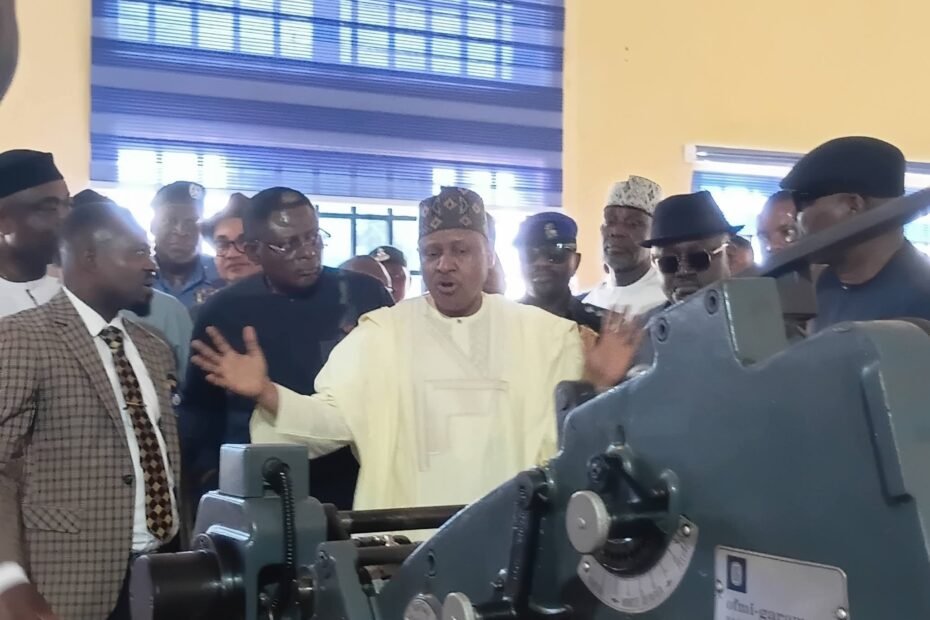
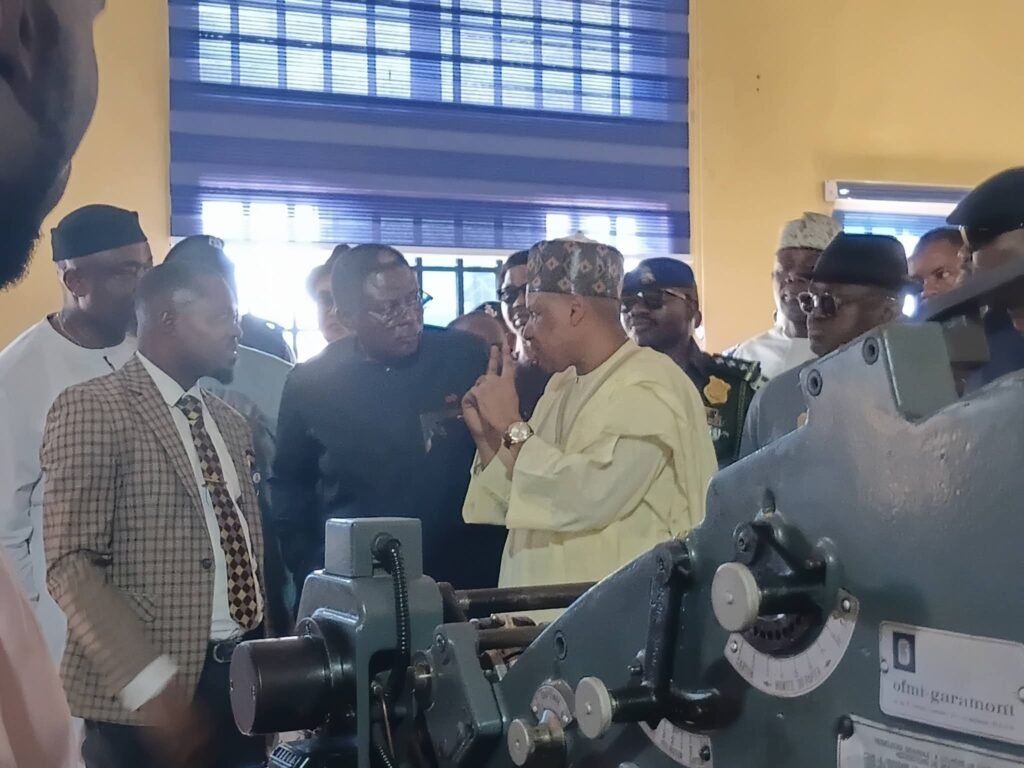
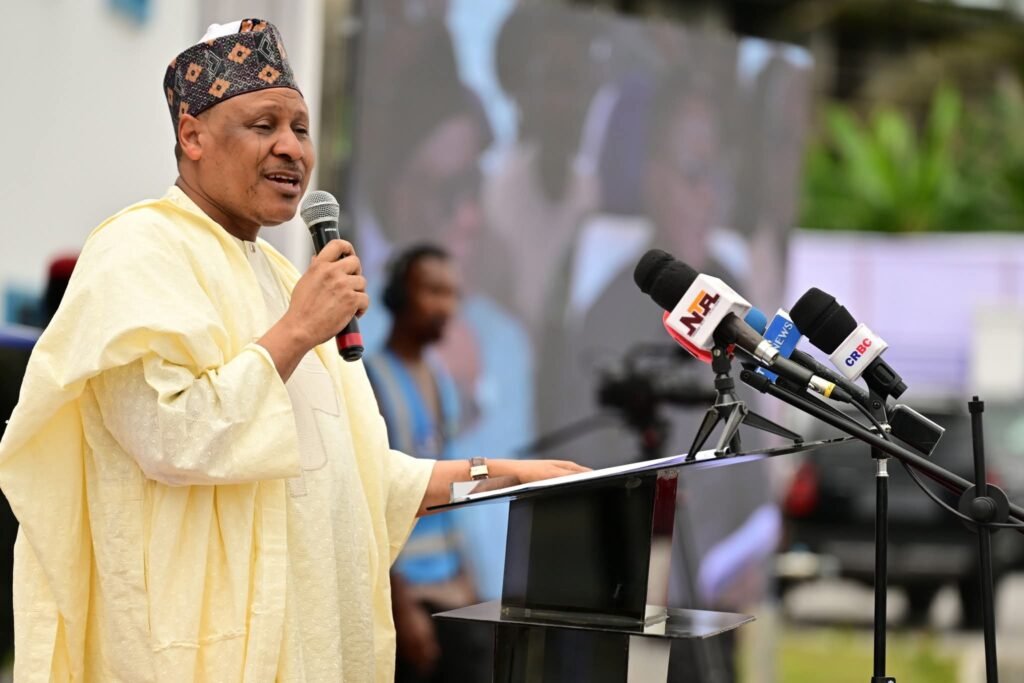
Idris gave the commendation on Thursday, September 3, 2026, in Calabar, during the official reactivation of the remodelled Cross River State Newspaper Corporation and commissioning of the newly installed Government Printing Press.
The minister said the project represented more than the renovation of a building or installation of equipment, describing it as an effort to restore an important public institution, preserve institutional memory and strengthen confidence in credible information and professional journalism.
He commended Governor Bassey Edet Otu for giving attention to the information sector and recognising information infrastructure as an important component of development.
According to Idris, the Cross River State Newspaper Corporation, established in 1971, had played a significant role in documenting the affairs of government and the people through publications including the Nigerian Chronicle and Weekend Chronicle.
He said the decision to rebuild and reposition the institution rather than allow it to disappear demonstrated the state government’s recognition of the continuing importance of credible public communication.
“Today is about much more than reopening a building or commissioning new equipment. It is about restoring an institution, preserving institutional memory and renewing confidence in the place of credible information, professional journalism and effective communication in governance,” Idris said.
The minister linked the initiative to Governor Otu’s “People First” philosophy, arguing that effective governance depended on effective communication between government and citizens.
He said citizens had the right to know what their government was doing, why decisions were being taken, what opportunities were available to them and how public policies affected their lives.
Information Hub must embrace digital journalism
Idris said the information environment had changed significantly since the establishment of the newspaper corporation more than five decades ago, with news now travelling within seconds across newspapers, radio, television, websites and social media.
He also noted that artificial intelligence was increasingly transforming the creation and distribution of content.
Despite the technological changes, he said credibility remained central to journalism.
“The faster information travels, the greater the premium we must place on verification. Technology may change the tools of journalism, but it cannot replace truth, accuracy, fairness and professional judgement,” he said.
The minister urged the Cross River Information Hub to evolve beyond a renovated structure and become a centre for credible journalism, digital innovation, professional development and public engagement.
He said the institution should use its platforms to tell the Cross River story to Nigeria and the international community.
Printing press will preserve public records
Idris also described the commissioning of the Government Printing Press as significant, stressing that official documentation remained indispensable despite the growth of digital communication.
He identified laws, gazettes, white papers, reports and other government records as important documents that must be properly produced, secured and preserved.
He said the Federal Government Press performed a similar role at the national level by producing and preserving documents that form part of Nigeria’s institutional memory.

“The lesson is simple: a government that does not preserve its records risks losing its history; a people who do not document their journey leave others to tell their story,” Idris said.
Idris defends Tinubu’s economic reforms
The minister also used the occasion to defend the Federal Government’s economic reforms under President Bola Ahmed Tinubu, particularly the removal of the petrol subsidy.
He acknowledged that the policy had created pressure for households and businesses but maintained that the previous subsidy arrangement was no longer sustainable.
According to him, the subsidy consumed substantial public resources, encouraged economic distortions and constrained investment in infrastructure, education, healthcare, security and other productive sectors.
He said the focus should now be on making the reforms deliver faster benefits rather than returning to the former system.
“This means accelerating domestic refining, improving transportation, expanding social protection, creating opportunities for businesses and ensuring that the additional fiscal space available to all tiers of government translates into visible improvements in the lives of our people,” he said.
Idris warned that any attempt to restore the former open-ended subsidy regime could threaten fiscal stability and weaken confidence in the country’s economic direction.
“The answer to the hardship associated with reform is not to dismantle reform; it is to accelerate its benefits,” he said.
Minister cautions against misinformation ahead of 2027
Speaking ahead of the 2027 general elections, Idris called on political actors, journalists and citizens to protect national unity and support a peaceful and credible democratic process.
He said the Tinubu administration remained committed to an electoral process in which the will of Nigerians would be respected, while urging relevant institutions to discharge their constitutional responsibilities independently and professionally.
He cautioned against the use of political competition to deepen ethnic, religious, sectional or partisan divisions.
“Elections will come and go; Nigeria will remain,” he said.
The minister also urged stakeholders to resist misinformation, disinformation, hate speech and inciting narratives as political activities intensify.
He said the 2027 elections would test not only Nigeria’s political institutions but also the integrity of its information ecosystem.
Idris challenged journalists to verify claims before publication and resist the pressure to sacrifice accuracy for speed or sensationalism.
“Political affiliation must never be allowed to displace professional judgement,” he said.
Calls for investment in journalists
The minister urged the Cross River State Government to sustain investment in the training and retraining of journalists, editors, printers, communication professionals and technical personnel.
He said modern equipment alone could not guarantee professional journalism or efficient printing services.
“The best equipment cannot replace professionalism. A modern newsroom cannot succeed without credible journalists. A printing press cannot fulfil its purpose without skilled operators and sound management,” he said.
Idris also advised young journalists and communication professionals working at the new Information Hub to embrace emerging technologies without abandoning professional standards.
“Be fast, but be accurate. Be competitive, but be ethical. Above all, guard your credibility. Public trust, once lost, is difficult to regain,” he said.
The minister said the Federal Ministry of Information and National Orientation was ready to collaborate with Cross River and other states to strengthen institutions responsible for connecting governments with citizens.
He described the development as part of a broader national conversation on the future of information in Nigeria, stressing the need for traditional media organisations to embrace digital platforms and develop new ways of reaching younger audiences.
Idris congratulated Governor Otu, the Cross River State Government, the state Ministry of Information and Orientation, management and staff of the newspaper corporation and others involved in the project.
He said the reactivation of the institution demonstrated that public institutions could be rebuilt, while the new Government Printing Press showed that information infrastructure could be modernised.
He expressed hope that the Cross River Information Hub would preserve the state’s history, uphold truth and professionalism, strengthen its voice and serve the people for generations.
